Alcino J. Silva
Studies the molecular and cellular basis of learning and memory, including how overactive mTOR signaling in tuberous sclerosis impairs memory and how rapamycin can reverse it in mice.
Distinguished Professor of Neurobiology · Director, Integrative Center for Learning and Memory, UCLA
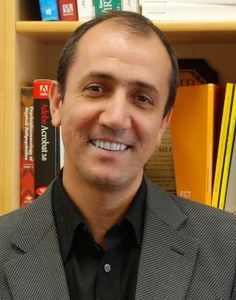 Portrait: Wikimedia Commons
Alcino Silva is a Distinguished Professor of Neurobiology at the University of California, Los Angeles, and directs UCLA's Integrative Center for Learning and Memory. His research asks how memories form in the brain and what goes wrong in genetic disorders that affect learning.
In the study in the Atlas, led by Dan Ehninger, the team worked with mice that carry one broken copy of the Tsc2 gene, a model of tuberous sclerosis. People with this condition often have learning and memory problems, even when they have normal intelligence. The mice also had learning deficits, without seizures or visible brain damage.
The cause was too much mTOR signaling in the hippocampus, a memory region, which disturbed a form of synaptic strengthening called long-term potentiation. A short treatment of adult mice with rapamycin restored both the synaptic plasticity and the behavior, which suggested that some cognitive problems in the disorder can be reversed.
Milestones in the Atlas
A selection, not a full bibliography: only papers that meet the Atlas inclusion criteria.
| Year | Evidence | Study |
|---|---|---|
| 2008 | A | Reversal of learning deficits in a Tsc2+/- mouse model of tuberous sclerosis EHN2008 Showed that Tsc2+/- mice have hippocampal mTOR hyperactivity and learning deficits, and that brief rapamycin treatment in adults rescued synaptic plasticity and behavior. Silva is the senior author. |
Co-authors in the Atlas
People with a profile here who share at least one study with Alcino J. Silva.
- Dan Ehninger Showed that rapamycin reverses learning deficits in adult mice carrying a tuberous sclerosis mutation, and later tested carefully whether rapamycin's lifespan effect reflects a true slowing of ageing
- David J. Kwiatkowski Geneticist and physician who studies tuberous sclerosis complex (TSC) and the TSC1/TSC2 genes that restrain mTORC1.
Every researcher with a profile →
Thank you. Your answer was counted anonymously.
Thank you. That helps us know which pages have been read by someone who knows the work.
Thank you. We will check it and correct the page.