Bing Su
Immunologist who studies how mTOR and MAPK signaling shape immune regulation and vascular function, and senior author of the study showing that SIN1 is a core part of mTORC2.
Director, Shanghai Institute of Immunology, Shanghai Jiao Tong University School of Medicine · Adjunct Professor, Yale School of Medicine · Joined SJTU 2012 · PhD, Yale (1991)
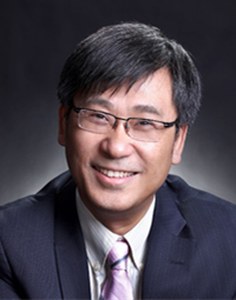 Portrait: Shanghai Jiao Tong University School of Medicine
Bing Su is a professor at Shanghai Jiao Tong University School of Medicine, where he directs the Shanghai Institute of Immunology and chairs the Department of Immunology and Microbiology. He also co-directs an institute for immune metabolism run jointly with Yale University, where he holds an adjunct appointment. He earned his PhD at Yale in 1991 and did postdoctoral training at the University of California, San Diego.
His lab studies how signaling inside cells, especially through mTOR and MAPK proteins, controls the immune system and blood vessels. In the Atlas he appears as senior author of a 2006 Cell paper led by Estela Jacinto. It asked how the mTORC2 complex switches on the kinase Akt. The team found that a protein called SIN1 is needed to hold mTORC2 together. Without SIN1, Akt was not phosphorylated at serine 473, but only some Akt targets were affected.
This showed that mTORC2 does not simply turn Akt on or off. It tunes which of Akt's targets are switched on, and it left the other mTOR complex, mTORC1, working normally.
Milestones in the Atlas
A selection, not a full bibliography: only papers that meet the Atlas inclusion criteria.
| Year | Evidence | Study |
|---|---|---|
| 2006 | M | SIN1/MIP1 maintains rictor-mTOR complex integrity and regulates Akt phosphorylation and substrate specificity JAC2006 Showed that SIN1 holds the rictor-mTOR complex together and is needed for Akt Ser473 phosphorylation, which affects only a subset of Akt targets such as FoxO1/3a; Su is senior (last) author. |
| 2008 | M | The mammalian target of rapamycin complex 2 controls folding and stability of Akt and protein kinase C FAC2008 Showed that mTORC2 phosphorylates the turn motif of Akt and conventional PKC, helping the new kinases fold and stay stable; Su was a co-author, with Estela Jacinto as senior author. |
| 2011 | M | Evidence for direct activation of mTORC2 kinase activity by phosphatidylinositol 3,4,5-trisphosphate GAN2011 PIP3 directly stimulates mTORC2 kinase activity, linking PI3K to mTORC2. |
| 2015 | M | PtdIns(3,4,5)P3-Dependent Activation of the mTORC2 Kinase Complex LIU2015 PIP3 relieves SIN1 PH-domain autoinhibition to activate the mTORC2 kinase complex. |
Co-authors in the Atlas
People with a profile here who share at least one study with Bing Su.
- Estela Jacinto 2 shared studies Co-discovered mammalian mTORC2 as a postdoc in Michael Hall's lab, showing that it controls the actin cytoskeleton and is insensitive to rapamycin. Her Rutgers lab, with Bing Su's group, was among those that found SIN1 holds mTORC2 together and studies how both mTOR complexes control metabolism
- Dianqing (Dan) Wu Signalling biologist who studies Wnt signalling and receptor-driven cell migration, and who showed that PIP3 can directly stimulate mTORC2 kinase activity.
- John Blenis Showed early on that rapamycin blocks S6 kinase, then worked out how mTORC1 drives cell growth through its two main translation targets, S6K1 and 4E-BP1. His lab also found, in parallel with the Sabatini lab, that mTORC1 phosphorylates Grb10, a feedback brake on insulin signalling
- Lewis C. Cantley Co-discovered PI3K, the pathway that feeds into mTOR from growth factors
- Valeria Facchinetti First author of the study showing that mTORC2 phosphorylates the turn motif of Akt and conventional PKC as the proteins are made, which helps them fold and stay stable
- Wenyi Wei Studies how protein stability and cell signalling, including the PI3K-mTOR-AKT network, are controlled in cancer cells.
Every researcher with a profile →
Thank you. Your answer was counted anonymously.
Thank you. That helps us know which pages have been read by someone who knows the work.
Thank you. We will check it and correct the page.