Peter T. Tsai
Child neurologist and neuroscientist who studies how the cerebellum contributes to autism; first author of the mouse study showing that loss of Tsc1 in Purkinje cells causes autism-like behaviour that rapamycin can prevent.
Associate Professor of Neurology, Neuroscience, Pediatrics and Psychiatry, UT Southwestern Medical Center · earlier Instructor in Neurology, Harvard Medical School / Boston Children's Hospital · pediatrics and child neurology residencies and behavioural neurology fellowship, Boston Children's Hospital (to 2011) · MD/PhD, David Geffen School of Medicine at UCLA (2005)
Tsai Lab, Department of Neurology, UT Southwestern Medical Center (Dallas, Texas, USA) ↗ Lab lineagetrained under Mustafa Sahin →
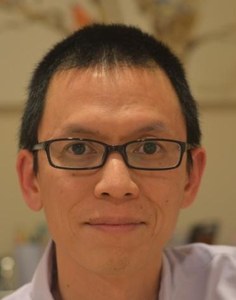 Portrait: UT Southwestern Medical Center
Peter Tsai was first author of the 2012 Nature study from Mustafa Sahin's group at Boston Children's Hospital (TSA2012). Deleting one or both copies of Tsc1 only in cerebellar Purkinje cells raised mTORC1 activity in those cells and produced autism-like behaviour in mice: reduced social preference, more self-grooming, more pup calls and poorer reversal learning. Purkinje cells fired less, homozygous mutants lost Purkinje cells and became ataxic, and rapamycin started from postnatal day 7 prevented these changes. This is prevention in mice; links to human autism are by analogy with tuberous sclerosis complex.
Tsai earned an MD/PhD at UCLA and trained in pediatrics, child neurology and behavioural neurology at Boston Children's Hospital, where he was an instructor at Harvard Medical School at the time of the study. He moved to UT Southwestern in Dallas, where his lab studies synapse and circuit development and cerebellar contributions to cognition and behaviour, and he sees patients at the Center for Autism and Neurodevelopmental Disabilities.
Milestones in the Atlas
A selection, not a full bibliography: only papers that meet the Atlas inclusion criteria.
| Year | Evidence | Study |
|---|---|---|
| 2012 | A | Autistic-like behaviour and cerebellar dysfunction in Purkinje cell Tsc1 mutant mice TSA2012 First author: mice lacking Tsc1 in cerebellar Purkinje cells show autism-like behaviour and Purkinje cell dysfunction, prevented by early rapamycin. |
| 2017 | A | Aberrant Proteostasis of BMAL1 Underlies Circadian Abnormalities in a Paradigmatic mTOR-opathy LIP2017 Co-author of the Sahin-lab follow-up on how mTORC1 shapes the daily (circadian) clock through BMAL1; Mustafa Sahin was senior author. |
Co-authors in the Atlas
People with a profile here who share at least one study with Peter T. Tsai.
- Mustafa Sahin 2 shared studies Senior author of the studies showing that mTOR signalling reaches the circadian clock through BMAL1, and a physician-scientist focused on tuberous sclerosis, the classic disease of overactive mTOR.
- Ashwin Nathan Co-author on both Boston Children's Hospital studies linking mTOR signalling to the circadian clock protein BMAL1.
- Elizabeth D. Yuan Second author on the study showing that S6K1 phosphorylates BMAL1 to link mTOR signalling with circadian protein synthesis, and co-author on the follow-up in tuberous sclerosis models.
- Fred C. Davis Circadian biologist from Northeastern University who brought expertise on the brain's master clock to two studies linking mTOR and the clock protein BMAL1.
- Jonathan O. Lipton First author of the two studies that tie mTOR signalling to the circadian clock protein BMAL1: S6K1 phosphorylates BMAL1 to drive translation, and constant mTOR activity in tuberous sclerosis disturbs the clock.
- Lara M. Boyle Research assistant at Boston Children's Hospital who co-authored both studies linking mTOR to the clock protein BMAL1, including the tuberous sclerosis study where she was second author.
Every researcher with a profile →
Thank you. Your answer was counted anonymously.
Thank you. That helps us know which pages have been read by someone who knows the work.
Thank you. We will check it and correct the page.