Julie St-Pierre
Biochemist and Vice-President, Research and Innovation at the University of Ottawa who studies how cancer cells adapt their metabolism, and a co-author on McGill work linking mTORC1 to mitochondria and to rapamycin-induced fatty liver
Vice-President, Research and Innovation, University of Ottawa (interim appointment from October 2024) · Full professor, Department of Biochemistry, Microbiology and Immunology, University of Ottawa (2017–) · Associate Vice-President, Research Support and Infrastructure, University of Ottawa (2023–2024) · Assistant professor to full professor, McGill University (2008–2017) · PhD, University of Cambridge
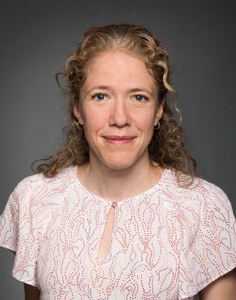 Portrait: University of Ottawa
Julie St-Pierre is a co-author on two Atlas studies from McGill University about mTORC1, the growth-control complex, and energy metabolism. The 2013 Cell Metabolism paper (MOR2013), led by Nahum Sonenberg's group, showed in cells that mTORC1 sets how many mitochondria a cell builds and how hard they work. Mitochondria are the cell's power stations. mTORC1 does this by releasing the brake that 4E-BP proteins put on the production of proteins the mitochondria need. This links the growth signal directly to the energy supply that growth needs.
The 2026 Journal of Endocrinology paper (BCH2026), from Vincent Giguère's group, is a mouse study. Rapamycin, which blocks mTORC1, can cause fatty liver, and adding the antimalarial drug chloroquine made that fatty liver milder. The rescue depended on ERR-alpha, a nuclear receptor that switches on many energy metabolism genes; in mice without it, chloroquine did not help.
St-Pierre studied at Laval University in Quebec (BSc and MSc), earned a doctorate at the University of Cambridge in England, and did postdoctoral research in Europe and the United States, including at the Dana-Farber Cancer Institute in Boston. From 2008 to 2017 St-Pierre was on the faculty of McGill University, rising from assistant to full professor, and co-founded and co-led a metabolomics core facility there for eight years. Metabolomics measures hundreds of small molecules of metabolism at once and gives a snapshot of a cell's metabolic state. In 2018 St-Pierre was also a co-author on the McGill study of how ERR-alpha shapes fatty liver on a high-fat diet. The main research theme is how breast cancer cells change their metabolism, and how those changes can help tumours resist treatment.
In 2017 the University of Ottawa recruited St-Pierre to set up a similar metabolomics facility in its Faculty of Medicine, with a professorship in the Department of Biochemistry, Microbiology and Immunology. St-Pierre became the university's Associate Vice-President, Research Support and Infrastructure in 2023, and took over as Vice-President, Research and Innovation in October 2024, first on an interim basis. The 2026 paper lists St-Pierre at both the Goodman Cancer Institute in Montreal and the University of Ottawa.
Milestones in the Atlas
A selection, not a full bibliography: only papers that meet the Atlas inclusion criteria.
| Year | Evidence | Study |
|---|---|---|
| 2013 | M | mTORC1 controls mitochondrial activity and biogenesis through 4E-BP-dependent translational regulation MOR2013 Co-author: contributed to the cell study showing that mTORC1 controls mitochondrial biogenesis and activity through 4E-BP-dependent translation. |
| 2026 | A | Rapamycin-induced fatty liver in mice is attenuated by chloroquine co-treatment in an ERRα-dependent manner BCH2026 Co-author: contributed to the mouse study showing that chloroquine softens rapamycin-induced fatty liver through ERR-alpha. |
Co-authors in the Atlas 4
People with a profile here who share at least one study with Julie St-Pierre.
ShowHide
- Masahiro Morita Biochemist at UT Health San Antonio who studies how mTORC1 controls protein synthesis, mRNA decay and mitochondria, and how these links go wrong in cancer and metabolic disease
- Nahum Sonenberg Co-discovered the mRNA cap-binding protein eIF4E and the 4E-BP proteins that restrain it, and showed how mTOR releases this brake to control protein synthesis
- Vincent Giguère Studies how nuclear receptors, especially the estrogen-related receptors (ERRs), control energy metabolism, and showed that mTOR and ERRα share target genes involved in lipid and TCA-cycle metabolism
- Wafa B'chir Metabolism researcher in Vincent Giguère's laboratory at McGill who studies how the nuclear receptor ERR-alpha controls fat handling in the liver, including the fatty liver caused by rapamycin
Every researcher with a profile →
Thank you. That helps us know which pages have been read by someone who knows the work.
Thank you. We will check it and correct the page.
Thank you. Your answer was counted anonymously.