Vincent Giguère
Studies how nuclear receptors, especially the estrogen-related receptors (ERRs), control energy metabolism, and showed that mTOR and ERRα share target genes involved in lipid and TCA-cycle metabolism
Professor of Biochemistry, McGill University · Goodman Cancer Institute · Fellow, Royal Society of Canada (2013)
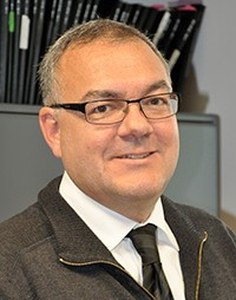 Portrait: Research Institute of the McGill University Health Centre
Vincent Giguère is a professor in the Department of Biochemistry at McGill University and is affiliated with the Goodman Cancer Institute. His laboratory studies nuclear hormone receptors, proteins that sit in the cell and switch genes on and off in response to signals. A main focus is the estrogen-related receptors (ERRs), which have no known natural ligand but control how cells handle fat, sugar and mitochondria.
His lab page describes a link to mTOR: mTOR can act as a regulator of gene activity at many promoters, including genes shared with ERRα that are involved in the TCA cycle and fat synthesis. A 2013 paper from the lab examined how this crosstalk contributes to the fatty liver that can follow rapamycin treatment.
The study collected in the Atlas continues this theme. Rapamycin, an mTORC1 inhibitor, can cause fat to build up in the liver of mice. In this work, the antimalarial drug chloroquine reduced that effect, and the rescue depended on ERRα. The Atlas entry is a mouse study, so it does not by itself show the same thing happens in people.
Milestones in the Atlas
A selection, not a full bibliography: only papers that meet the Atlas inclusion criteria.
| Year | Evidence | Study |
|---|---|---|
| 2026 | A | Rapamycin-induced fatty liver in mice is attenuated by chloroquine co-treatment in an ERRα-dependent manner BCH2026 Mouse study in which chloroquine co-treatment lessened rapamycin-induced fatty liver, with the protection depending on ERRα; the Atlas lists Giguère as senior author, consistent with his lab's ERRα–mTOR work. |
Co-authors in the Atlas 2
People with a profile here who share at least one study with Vincent Giguère.
ShowHide
- Julie St-Pierre Biochemist and Vice-President, Research and Innovation at the University of Ottawa who studies how cancer cells adapt their metabolism, and a co-author on McGill work linking mTORC1 to mitochondria and to rapamycin-induced fatty liver
- Wafa B'chir Metabolism researcher in Vincent Giguère's laboratory at McGill who studies how the nuclear receptor ERR-alpha controls fat handling in the liver, including the fatty liver caused by rapamycin
Every researcher with a profile →
Thank you. That helps us know which pages have been read by someone who knows the work.
Thank you. We will check it and correct the page.
Thank you. Your answer was counted anonymously.