Adam T. Waickman
Immunologist who trained in Jonathan Powell's mTOR and T cell lab at Johns Hopkins and now studies human immune responses to dengue virus at SUNY Upstate Medical University
Department of Microbiology and Immunology, SUNY Upstate Medical University (2025 Upstate news, 2026 PubMed affiliation) · Sidney Kimmel Comprehensive Cancer Center, Johns Hopkins University School of Medicine (Powell lab, around 2011–2016)
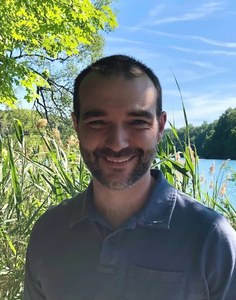 Portrait: The Waickman Lab, SUNY Upstate Medical University
Adam Waickman appears in this Atlas on two papers from Jonathan Powell's laboratory at Johns Hopkins that split T cell decisions between the two mTOR complexes. The 2011 Nature Immunology paper showed that mTORC1 and mTORC2 steer helper (CD4) T cells into different lineages. The 2015 Journal of Clinical Investigation paper did the same for killer (CD8) T cells: constant mTORC1 activity, after deleting Tsc2, produced aggressive but short-lived effector cells with no memory, while removing mTORC1 activity by deleting Rheb gave memory-like cells that still responded poorly to a second encounter with the antigen.
In the same period Waickman co-authored a 2015 PLoS One study from the lab showing that, within one batch of freshly activated CD4 T cells, the larger cells with high mTOR activity become glycolytic effector cells, while the smaller cells with low mTOR activity tend to become long-lived cells and regulatory T cells, a pattern also seen in human T cells.
PubMed lists close to 70 papers under Waickman's name. The recent ones come from the Department of Microbiology and Immunology at SUNY Upstate Medical University in Syracuse and deal with human immunity to dengue virus, including a 2026 Lancet Microbe report on a first-in-human dengue serotype 4 challenge study run with the University of Maryland and the Walter Reed Army Institute of Research. In 2025 Upstate announced a 3.1 million dollar NIH grant for Waickman to study how a second dengue infection becomes life-threatening and to build tools for better dengue diagnosis, vaccines and patient care.
Milestones in the Atlas
A selection, not a full bibliography: only papers that meet the Atlas inclusion criteria.
| Year | Evidence | Study |
|---|---|---|
| 2011 | A | The kinase mTOR regulates the differentiation of helper T cells through the selective activation of signaling by mTORC1 and mTORC2 DEL2011 Co-author on the study showing that mTORC1 and mTORC2 selectively program distinct CD4 helper T-cell lineages. |
| 2015 | A | mTORC1 and mTORC2 selectively regulate CD8+ T cell differentiation POL2015 Co-author on the study showing that mTORC1 activity drives effector CD8 T cells at the expense of memory. |
Co-authors in the Atlas 4
People with a profile here who share at least one study with Adam T. Waickman.
ShowHide
- Greg M. Delgoffe 2 shared studies Showed as a graduate student in Jonathan Powell's lab that T cells lacking mTOR become regulatory rather than effector T cells, and that mTORC1 and mTORC2 steer different helper-T-cell fates
- Jonathan D. Powell 2 shared studies Showed that T cells lacking mTOR become regulatory T cells instead of effector cells, and that mTORC1 and mTORC2 each steer a different type of helper T cell
- Kristen N. Pollizzi 2 shared studies Immunologist trained in Jonathan Powell's lab at Johns Hopkins who used gene deletions in mice to show how the two mTOR complexes push killer T cells toward effector or memory fates
- Maureen R. Horton Pulmonary physician-scientist who studies immune mechanisms of lung inflammation and fibrosis
Every researcher with a profile →
Thank you. That helps us know which pages have been read by someone who knows the work.
Thank you. We will check it and correct the page.
Thank you. Your answer was counted anonymously.