Yuji Ikeno
Pathologist at the Barshop Institute for Longevity and Aging Studies in San Antonio whose examinations of tissues from aged mice help ageing studies tell whether an intervention changes disease, especially cancer, late in life
Barshop Institute for Longevity and Aging Studies, UT Health San Antonio (affiliation on PubMed papers)
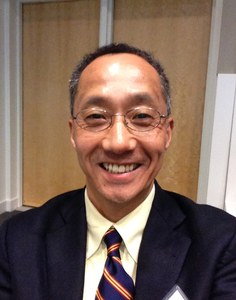 Portrait: Barshop Institute, UT Health San Antonio
Yuji Ikeno is a co-author of two Atlas papers on ageing. LAB2015, from Judith Campisi's group, studied senescent cells, old cells that stop dividing but keep releasing inflammatory signals called the SASP. These signals can harm nearby tissue and even help tumours grow. The team showed that mTOR drives the SASP by boosting the production of IL1A, the signal at the top of the cascade, and that rapamycin turned this off and stopped senescent cells from feeding prostate tumour growth in mice. DUR2026, from John Kopchick's group, deleted the growth hormone receptor in mice at 12 months of age, which is middle age for a mouse. The mice still lived longer, in both sexes, and the males kept better insulin sensitivity, muscle performance and bone. This matters because most growth-hormone longevity mice lack the hormone signal from birth, while this study shows that a midlife start is still enough.
PubMed lists Ikeno on more than 120 papers on ageing, many of them from the Barshop Institute in San Antonio, where the long-lived mouse models and anti-ageing drug studies need careful pathology to show what the animals died of and which diseases were delayed. In both Atlas papers the role is consistent with this: examining tissues from the mice.
No official profile could be checked, so academic rank and training are not given here.
Milestones in the Atlas
A selection, not a full bibliography: only papers that meet the Atlas inclusion criteria.
| Year | Evidence | Study |
|---|---|---|
| 2015 | M | mTOR regulates the pro-tumorigenic senescence-associated secretory phenotype by promoting IL1A translation LAB2015 Co-author on the study showing that mTOR drives the senescence-associated secretory phenotype through IL1A translation and that rapamycin blocks it. |
| 2026 | A | Midlife Growth Hormone Receptor Ablation Extends Healthy Lifespan and Induces Sex-Specific Hepatic Transcriptional Changes at Single-Cell Resolution DUR2026 Co-author on the study showing that deleting the growth hormone receptor in midlife still extends healthy lifespan in mice. |
Co-authors in the Atlas 7
People with a profile here who share at least one study with Yuji Ikeno.
ShowHide
- Darlene E. Berryman Showed that growth hormone reshapes fat tissue in a depot-specific way that links body composition to metabolic aging
- Edward O. List Carries out mouse studies, in John Kopchick's group, on how disrupting growth hormone receptor signaling extends mammalian lifespan
- John J. Kopchick Discovered the growth hormone receptor antagonist that became the acromegaly drug pegvisomant (Somavert), and studies how blocking growth hormone signalling extends lifespan in mice
- Judith Campisi Pioneer of research on cellular senescence and the senescence-associated secretory phenotype (SASP); her 2015 paper showed that mTOR drives the inflammatory SASP.
- Pankaj Kapahi Showed that reducing TOR signalling extends fruit-fly lifespan, and that the translation repressor 4E-BP is needed for dietary restriction to extend it
- Remi-Martin Laberge Biologist of cell senescence, trained in Judith Campisi's lab, who showed how mTOR drives the inflammatory signals of senescent cells and then moved to drug development against senescence at UNITY Biotechnology
- Silvana Duran-Ortiz Researcher in John Kopchick's group at Ohio University who studies how switching off growth hormone action, even in middle age, lengthens life in mice
Every researcher with a profile →
Thank you. That helps us know which pages have been read by someone who knows the work.
Thank you. We will check it and correct the page.
Thank you. Your answer was counted anonymously.