Judith Campisi
Pioneer of research on cellular senescence and the senescence-associated secretory phenotype (SASP); her 2015 paper showed that mTOR drives the inflammatory SASP.
Deceased 19 January 2024 (1950–2024) · Buck Institute for Research on Aging (from 2002) · Lawrence Berkeley National Laboratory · Boston University Medical School
Campisi Lab, Buck Institute for Research on Aging (Novato, California, USA) ↗
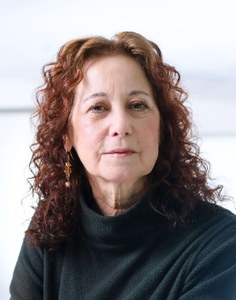 Portrait: Buck Institute for Research on Aging
Judith Campisi (1950–2024) was a cell biologist at the Buck Institute for Research on Aging in California, which she joined in 2002. Earlier she worked at Lawrence Berkeley National Laboratory and at Boston University Medical School. She died on 19 January 2024. She is known for showing that cellular senescence, a state in which damaged cells stop dividing, is a key driver of ageing, and that it also protects against cancer.
Senescent cells do not simply sit quietly. They release inflammatory signals known as the senescence-associated secretory phenotype, or SASP. In the 2015 Nature Cell Biology study in the Atlas, Campisi was the last author. The team found that rapamycin, which blocks mTORC1, reduced the inflammatory output of senescent cells without bringing the cells back to dividing.
The mechanism they identified was selective: rapamycin cut translation of IL1A, a cytokine at the top of the inflammatory cascade, which lowered NF-kB activity. In mice, rapamycin also reduced the ability of senescent fibroblasts to stimulate prostate tumour growth. The paper gave one explanation for why rapamycin may help against age-related inflammation.
Milestones in the Atlas
A selection, not a full bibliography: only papers that meet the Atlas inclusion criteria.
| Year | Evidence | Study |
|---|---|---|
| 2015 | M | mTOR regulates the pro-tumorigenic senescence-associated secretory phenotype by promoting IL1A translation LAB2015 Senior author of the study showing that mTOR promotes IL1A translation and so drives the pro-tumorigenic SASP, and that rapamycin suppresses it. |
Co-authors in the Atlas 3
People with a profile here who share at least one study with Judith Campisi.
ShowHide
- Pankaj Kapahi Showed that reducing TOR signalling extends fruit-fly lifespan, and that the translation repressor 4E-BP is needed for dietary restriction to extend it
- Remi-Martin Laberge Biologist of cell senescence, trained in Judith Campisi's lab, who showed how mTOR drives the inflammatory signals of senescent cells and then moved to drug development against senescence at UNITY Biotechnology
- Yuji Ikeno Pathologist at the Barshop Institute for Longevity and Aging Studies in San Antonio whose examinations of tissues from aged mice help ageing studies tell whether an intervention changes disease, especially cancer, late in life
Every researcher with a profile →
Thank you. That helps us know which pages have been read by someone who knows the work.
Thank you. We will check it and correct the page.
Thank you. Your answer was counted anonymously.