Salvatore Oddo
Alzheimer's disease researcher who showed that amyloid-beta raises mTOR activity and that lowering mTOR with rapamycin cuts amyloid and Tau pathology in mice through autophagy
Associate Professor of Molecular Biology, University of Messina (from 2020, per his 2022 CV) · Associate Professor, School of Life Sciences, Arizona State University (2015–2020) · Assistant Professor, UT Health Science Center at San Antonio (2008–2013) · PhD, UC Irvine
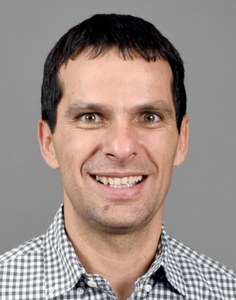 Portrait: Arizona State University (via EurekAlert!)
Salvatore Oddo studies Alzheimer's disease, in which two sticky proteins, amyloid-beta and Tau, build up in the brain. He trained at the University of California, Irvine, where he earned his PhD in neurobiology, and ran his own lab at UT Health Science Center at San Antonio when the Atlas study was published in 2010. His CV lists later posts at Banner Sun Health Research Institute, Arizona State University and, since 2020, the University of Messina in Italy.
The 2010 paper, with Antonella Caccamo as first author, asked how amyloid-beta damages memory. In 3xTg-AD mice, which develop both amyloid and Tau pathology, rising amyloid-beta increased mTOR signaling, and high mTOR in turn reduced autophagy, the cell's recycling system that clears protein clumps. This forms a loop in which the disease feeds itself.
Treating the mice with rapamycin broke the loop: memory improved and both amyloid and Tau pathology fell. The team also showed that autophagy was needed for the drop in amyloid. The work is in mice, so it is evidence for a mechanism, not proof of a treatment for people.
Milestones in the Atlas
A selection, not a full bibliography: only papers that meet the Atlas inclusion criteria.
| Year | Evidence | Study |
|---|---|---|
| 2010 | A | Molecular interplay between mammalian target of rapamycin (mTOR), amyloid-beta, and Tau: effects on cognitive impairments. CAC2010 Showed in 3xTg-AD mice that amyloid-beta raises mTOR activity and that rapamycin rescues memory while lowering amyloid and Tau through autophagy; Oddo is senior author. |
| 2012 | A | Lifelong rapamycin administration ameliorates age-dependent cognitive deficits by reducing IL-1β and enhancing NMDA signaling MAJ2012 Showed in normally ageing mice that rapamycin from 2 months of age preserved spatial memory at 18 months while a start at 15 months did not, with lower brain IL-1beta and higher NR2B and CREB phosphorylation; Oddo is senior author. |
Co-authors in the Atlas 4
People with a profile here who share at least one study with Salvatore Oddo.
ShowHide
- Arlan Richardson 2 shared studies Studies how rapamycin slows ageing in mice, including the broad changes it causes in the liver, and co-authored early studies showing that rapamycin protects memory in Alzheimer's-model mice
- Randy Strong 2 shared studies Leads the San Antonio site of the NIA Interventions Testing Program, which tests each compound in parallel at three sites under one shared protocol. He first-authored the program's reports on resveratrol and other supplements (2012) and on rapamycin combined with acarbose (2022)
- Antonella Caccamo Neuroscientist who, with Salvatore Oddo, showed in Alzheimer's model mice that amyloid-beta and mTOR feed each other in a loop that rapamycin can break
- Smita Majumder First author of a mouse study in Salvatore Oddo's group showing that rapamycin started early in life, but not in middle age, protected against age-related memory decline
Every researcher with a profile →
Thank you. That helps us know which pages have been read by someone who knows the work.
Thank you. We will check it and correct the page.
Thank you. Your answer was counted anonymously.