Antonella Caccamo
Neuroscientist who, with Salvatore Oddo, showed in Alzheimer's model mice that amyloid-beta and mTOR feed each other in a loop that rapamycin can break
Department of Chemical, Biological, Pharmaceutical and Environmental Sciences, University of Messina (papers 2024–2026) · ASU-Banner Neurodegenerative Disease Research Center, Arizona State University (papers to about 2020) · Department of Physiology, University of Texas Health Science Center at San Antonio (2010)
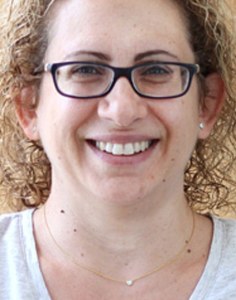 Portrait: Arizona State University (ASU News)
Alzheimer's disease has two hallmarks: clumps of amyloid-beta outside nerve cells and tangles of the protein tau inside them. In a 2010 mouse study (CAC2010), Antonella Caccamo, first author in Salvatore Oddo's group at the University of Texas Health Science Center in San Antonio, found that the two are tied to mTOR in a loop. Amyloid-beta raised mTOR activity. High mTOR in turn blocked autophagy, the cell's clean-up process, so more amyloid and tau built up. In 3xTg-AD mice, a model that develops both hallmarks, rapamycin broke the loop, improved memory and lowered both amyloid-beta and tau. When autophagy was blocked, the drop in amyloid disappeared, which showed that autophagy was needed for the benefit. All of this was in mice, not in people.
Caccamo and Oddo later moved to the ASU-Banner Neurodegenerative Disease Research Center at Arizona State University, where they continued to publish together, including work on autophagy in Alzheimer's model mice.
PubMed records since 2024 list Caccamo, again with Oddo, at the Department of Chemical, Biological, Pharmaceutical and Environmental Sciences of the University of Messina in Italy. Recent work includes a 2024 review on DNA methylation and histone changes in Alzheimer's disease and a 2026 mouse study on the lipid enzyme diacylglycerol kinase theta, whose levels rose with amyloid and with activation of support cells called astrocytes in older APP/PS1 mice.
Milestones in the Atlas
A selection, not a full bibliography: only papers that meet the Atlas inclusion criteria.
| Year | Evidence | Study |
|---|---|---|
| 2010 | A | Molecular interplay between mammalian target of rapamycin (mTOR), amyloid-beta, and Tau: effects on cognitive impairments. CAC2010 First author: showed in 3xTg-AD mice that amyloid-beta raises mTOR, that high mTOR blocks autophagy, and that rapamycin breaks this loop and improves memory. |
Co-authors in the Atlas 3
People with a profile here who share at least one study with Antonella Caccamo.
ShowHide
- Arlan Richardson Studies how rapamycin slows ageing in mice, including the broad changes it causes in the liver, and co-authored early studies showing that rapamycin protects memory in Alzheimer's-model mice
- Randy Strong Leads the San Antonio site of the NIA Interventions Testing Program, which tests each compound in parallel at three sites under one shared protocol. He first-authored the program's reports on resveratrol and other supplements (2012) and on rapamycin combined with acarbose (2022)
- Salvatore Oddo Alzheimer's disease researcher who showed that amyloid-beta raises mTOR activity and that lowering mTOR with rapamycin cuts amyloid and Tau pathology in mice through autophagy
Every researcher with a profile →
Thank you. That helps us know which pages have been read by someone who knows the work.
Thank you. We will check it and correct the page.
Thank you. Your answer was counted anonymously.