Rachel M. Jansen
First author of the cryo-EM structure showing how the arginine sensor CASTOR1 binds the GATOR2 cage when arginine is low and is released when arginine returns
Former member of James Hurley's lab, Department of Molecular & Cell Biology, UC Berkeley · now at Boston Consulting Group (according to the Hurley lab alumni list)
Hurley Lab, UC Berkeley (Berkeley, California, USA) ↗
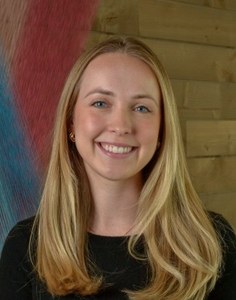 Portrait: provided to the Atlas
Rachel Jansen worked in James Hurley's structural biology lab at UC Berkeley, together with Roberto Zoncu's group. She is first author of the 2025 structure of human GATOR2 bound to CASTOR1 without arginine: two propeller domains of the GATOR2 cage hold one CASTOR1 pair, and arginine blocks that contact by ordering a loop in CASTOR1.
She is also a co-author of the 2026 Nature paper on a TBK1/ULK1 pathway that couples lysosomal stress to TFEB. The lab's alumni list gives her current position as Boston Consulting Group.
The timeline below traces her studies gathered in this Atlas.
Milestones in the Atlas
A selection, not a full bibliography: only papers that meet the Atlas inclusion criteria.
| Year | Evidence | Study |
|---|---|---|
| 2025 | M | Structural basis for mTORC1 regulation by the CASTOR1-GATOR2 complex JAN2025 First author: cryo-EM structure of GATOR2 bound to CASTOR1 without arginine. |
| 2026 | M | A TBK1/ULK1 signalling axis couples lysosomal stress to TFEB activation. ESP2026 Co-author: a nutrient-independent lysosomal TBK1/ULK1 pathway that inhibits FLCN and releases TFEB. |
Co-authors in the Atlas
People with a profile here who share at least one study with Rachel M. Jansen.
- James H. Hurley 2 shared studies Structural biologist who uses cryo-EM to show how protein machines assembled on membranes control autophagy and nutrient signalling. His lab solved structures of the Rag–Ragulator complex and of the whole mTORC1–TFEB–Rag–Ragulator assembly on the lysosome
- Alessandra Esposito Lysosomal signalling and TFEB regulation
- Alessia Calcagnì TIGEM researcher on the TFEB/TFE3 side of mTORC1 signalling; co-author on the lysosomal stress route to TFEB activation and on mouse models separating mTORC1 from TFEB/TFE3 in kidney cysts and tumours.
- Andrea Ballabio Discovered that the transcription factor TFEB is a master switch for building lysosomes (SAR2009) and for autophagy. His lab was one of the groups that showed in 2012 that mTORC1 keeps TFEB out of the nucleus from the lysosome surface, and later (2020) that constitutive TFEB activation drives the kidney disease of Birt-Hogg-Dubé syndrome
- Gennaro Napolitano mTORC1-TFEB lysosomal signalling
- Jlenia Monfregola TIGEM postdoc and co-author on the cryo-EM structure of the mTORC1–TFEB–Rag–Ragulator megacomplex and on the TBK1/ULK1 lysosomal stress route to TFEB.
- Jörn Dengjel Mass-spectrometry proteomics specialist in autophagy and protein homeostasis; co-author on the TBK1/ULK1–TFEB lysosomal stress pathway and on the spermidine lifespan and cardioprotection study.
- Roberto Zoncu Showed as a postdoc that mTORC1 senses amino acids from inside the lysosome, through the v-ATPase and Ragulator. His Berkeley lab has since mapped how the Rag GTPases and the folliculin complex switch mTORC1 on, and how lysosomal cholesterol feeds into the same system
Every researcher with a profile →
Thank you. Your answer was counted anonymously.
Thank you. That helps us know which pages have been read by someone who knows the work.
Thank you. We will check it and correct the page.