Mauro Costa-Mattioli
Neuroscientist who studies how mTOR signaling and protein synthesis control learning, memory and brain function, including the role of mTORC2 in long-term memory.
Adjunct Professor of Neuroscience, Baylor College of Medicine · PhD, University of Nantes (2002) · Postdoctoral fellow, McGill University
MCM Lab, Department of Neuroscience, Baylor College of Medicine (Houston, Texas, USA) ↗
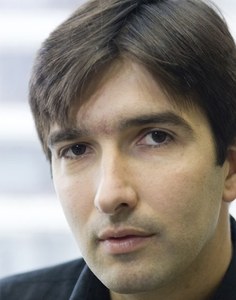 Portrait: Baylor College of Medicine
Mauro Costa-Mattioli studied in Uruguay and France before earning his PhD at the University of Nantes in 2002 and training as a postdoctoral fellow at McGill University in Montreal. He is listed at Baylor College of Medicine in Houston in the Department of Neuroscience, and runs the MCM Lab.
His lab asks how the brain turns a short-lived experience into a lasting memory, and how cells control protein production to make this possible. The 2013 Nature Neuroscience study in the Atlas, led by Wei Huang, looked at mTORC2, the rapamycin-insensitive form of mTOR. Mice that lacked its key partner Rictor in the forebrain could learn, but could not keep long-term memories.
The team traced the problem to actin, the protein scaffold that reshapes the connections between neurons. Restoring actin polymerization rescued memory, and a compound that boosted mTORC2 activity improved it.
Milestones in the Atlas
A selection, not a full bibliography: only papers that meet the Atlas inclusion criteria.
| Year | Evidence | Study |
|---|---|---|
| 2009 | R | Translational control of long-lasting synaptic plasticity and memory COS2009 Narrative review arguing that the start of mRNA translation, controlled by the mTORC1 and eIF2alpha pathways, is a main control point for long-lasting synaptic plasticity and long-term memory; Costa-Mattioli is first author. |
| 2013 | A | mTORC2 controls actin polymerization required for consolidation of long-term memory HUA2013 Deleting Rictor in the mouse forebrain impaired long-term memory and late-phase LTP through reduced actin polymerization; restoring actin rescued both, and an mTORC2-boosting compound enhanced memory. Costa-Mattioli is senior (last) author. |
Co-authors in the Atlas
People with a profile here who share at least one study with Mauro Costa-Mattioli.
- Krešimir Krnjević Neurophysiologist who helped identify glutamate and GABA as the brain's main excitatory and inhibitory transmitters and described slow modulatory actions of acetylcholine in the cortex.
- Nahum Sonenberg Co-discovered the mRNA cap-binding protein eIF4E and the 4E-BP proteins that restrain it, and showed how mTOR releases this brake to control protein synthesis
Every researcher with a profile →
Thank you. Your answer was counted anonymously.
Thank you. That helps us know which pages have been read by someone who knows the work.
Thank you. We will check it and correct the page.