Krešimir Krnjević
Neurophysiologist who helped identify glutamate and GABA as the brain's main excitatory and inhibitory transmitters and described slow modulatory actions of acetylcholine in the cortex.
Professor Emeritus of Physiology, McGill University · 1927–2021 · Gairdner International Award (1984)
Department of Physiology, McGill University (Montreal, Quebec, Canada) ↗
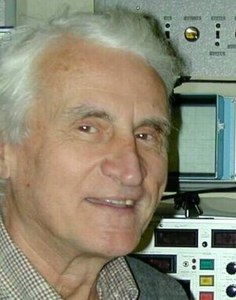 Portrait: Academia Europaea
Krešimir Krnjević was born in Zagreb in 1927, studied medicine at the University of Edinburgh and joined McGill University in 1964, where he stayed for about fifty years, serving as Director of Research in Anesthesia and later chair of Physiology. He died in 2021. His honours include the Gairdner International Award (1984), election to the Royal Society of Canada (1975) and the Order of Canada (1987).
Using microiontophoresis on single neurons, he helped show which chemicals the brain uses to excite and to inhibit nerve cells. He also showed that acetylcholine can slowly excite cortical neurons by reducing potassium conductance, and that rising calcium inside a neuron opens potassium channels and links metabolism to excitability.
HUA2013 is a Nature Neuroscience paper from the Costa-Mattioli group with Krnjević as a late co-author. Deleting Rictor, a core part of mTORC2, in the mouse forebrain lowered mTORC2 activity and impaired long-term memory and the late phase of hippocampal long-term potentiation. The effect traced to actin polymerization, so mTORC2 appears to be needed for memory to be stored for the long term.
Milestones in the Atlas
A selection, not a full bibliography: only papers that meet the Atlas inclusion criteria.
| Year | Evidence | Study |
|---|---|---|
| 2013 | A | mTORC2 controls actin polymerization required for consolidation of long-term memory HUA2013 Co-author of the Nature Neuroscience study showing that mTORC2 controls actin polymerization needed for long-term memory consolidation. |
Co-authors in the Atlas
People with a profile here who share at least one study with Krešimir Krnjević.
- Mauro Costa-Mattioli Neuroscientist who studies how mTOR signaling and protein synthesis control learning, memory and brain function, including the role of mTORC2 in long-term memory.
Every researcher with a profile →
Thank you. Your answer was counted anonymously.
Thank you. That helps us know which pages have been read by someone who knows the work.
Thank you. We will check it and correct the page.