Marc Turner
Research assistant and lab manager in Brendan Manning's mTOR lab at Harvard from 2014 to 2016, who contributed to studies on nucleotide synthesis in tumour cells and on metformin's route to mTORC1
Postdoctoral Fellow, University of California, San Francisco (per Manning lab alumni page) · research assistant and lab manager, Manning lab, Harvard T.H. Chan School of Public Health (2014–2016, at the time of the studies)
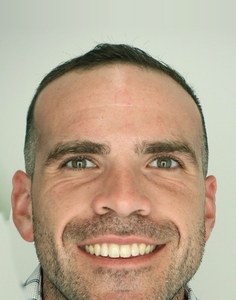 Portrait: LinkedIn
Marc Turner is a co-author on two Atlas papers from Brendan Manning's lab. VAL2017 studied cells that lack the TSC genes, so their mTORC1 (the growth-control complex) is always on. Such cells make DNA building blocks, nucleotides, at a high rate to keep up with growth; when nucleotide supply falls behind demand, DNA copying stalls, a condition called replication stress. The study used this imbalance as a weak point that drugs can target, tested in cells and mouse tumour models. HOW2017 showed in mouse liver and liver cells that the diabetes drug metformin lowers cell energy and, at low doses, inhibits mTORC1 through AMPK and the TSC complex.
The Manning lab alumni page lists Turner as research assistant and lab manager from 2014 to 2016 and gives a later position as Postdoctoral Fellow at the University of California, San Francisco. The common surname made it impossible to match later PubMed papers with confidence, so present research is not described here.
Milestones in the Atlas
A selection, not a full bibliography: only papers that meet the Atlas inclusion criteria.
| Year | Evidence | Study |
|---|---|---|
| 2017 | M | mTORC1 Couples Nucleotide Synthesis to Nucleotide Demand Resulting in a Targetable Metabolic Vulnerability VAL2017 Co-author on the paper linking hyperactive mTORC1 to nucleotide demand and a drug-sensitive weakness in TSC-deficient cells. |
| 2017 | M | Metformin Inhibits Hepatic mTORC1 Signaling via Dose-Dependent Mechanisms Involving AMPK and the TSC Complex HOW2017 Co-author on the paper showing metformin inhibits mTORC1 in mouse liver through AMPK and the TSC complex. |
Co-authors in the Atlas 8
People with a profile here who share at least one study with Marc Turner.
ShowHide
- Brendan D. Manning 2 shared studies Was among the groups that in 2002 identified TSC2 as a direct target of Akt (MAN2002), linking insulin and PI3K signalling to mTORC1, and later found TBC1D7 as the third subunit of the TSC complex. His lab has shown how mTORC1 turns growth signals into the synthesis of lipids and nucleotides
- Alexander J. Valvezan Showed as a Manning-lab postdoc that mTORC1 matches nucleotide production to demand, creating a weak point that can be targeted in tumours with TSC loss. His Rutgers lab found that mTORC1 activity rises and falls through the cell cycle and helps drive entry into mitosis
- David J. Kwiatkowski Geneticist and physician who studies tuberous sclerosis complex (TSC) and the TSC1/TSC2 genes that restrain mTORC1.
- George Talbott Research assistant in Brendan Manning's mTOR lab at Harvard in 2013 and 2014, who contributed to studies on where the TSC complex sits in the cell and how metformin reaches mTORC1
- Gerta Hoxhaj Studies how growth signalling through PI3K, AKT and mTOR rewires cell metabolism; as a Manning-lab postdoc she co-authored work on how metformin inhibits mTORC1 in the liver
- Jessica J. Howell Metabolism biologist who, as a postdoc in Brendan Manning's lab at Harvard, worked out how the diabetes drug metformin switches off mTORC1 in the liver, and who later moved into drug and gene-therapy research in industry
- John M. Asara Mass-spectrometry specialist whose core facility supplied metabolomics and proteomics for several mTOR studies, including measurements of purine, pyrimidine and SAM metabolism downstream of mTORC1.
- Reuben J. Shaw Showed, in parallel with two other groups, that the tumour suppressor LKB1 directly activates AMPK, and that AMPK brakes mTORC1 by phosphorylating raptor. His Salk lab also linked AMPK to autophagy through ULK1 and helped explain how metformin acts in the liver
Every researcher with a profile →
Thank you. That helps us know which pages have been read by someone who knows the work.
Thank you. We will check it and correct the page.
Thank you. Your answer was counted anonymously.