Jessica J. Howell
Metabolism biologist who, as a postdoc in Brendan Manning's lab at Harvard, worked out how the diabetes drug metformin switches off mTORC1 in the liver, and who later moved into drug and gene-therapy research in industry
Lead (Principal) Scientist and Project Manager, Spark Therapeutics (per Manning lab alumni page) · scientist, Navitor Pharmaceuticals, Cambridge, Massachusetts (2019 paper) · postdoctoral fellow, Manning lab, Harvard T.H. Chan School of Public Health (2010–2016) · Markus Stoffel's group, Institute of Molecular Systems Biology, ETH Zurich (papers 2008–2009)
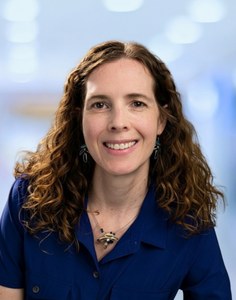 Portrait: ChristianaCare Gene Editing Institute
Metformin is the most widely prescribed diabetes drug and is also tested as a possible anti-aging medicine, yet how it acts inside cells has long been debated. In HOW2017, Jessica Howell, working in Brendan Manning's lab, asked how metformin reaches mTORC1, the growth-control complex that tells cells when to build proteins and fats. In mouse liver and in liver cells the study found that metformin lowers the cell's energy supply and that, at lower doses, this shuts down mTORC1 through two known brakes: the energy sensor AMPK and the TSC complex. At higher doses other routes come into play. The study is a direct mechanistic link between a common drug, cellular energy sensing and the mTOR pathway, though it was done in mice and cultured cells, not in people.
Howell's earlier research was on how insulin controls the liver. In Markus Stoffel's group at the Institute of Molecular Systems Biology, ETH Zurich, Howell studied the transcription factor Foxa2 and showed in 2009 that insulin turns it off by phosphorylation rather than by moving it out of the nucleus. Howell joined the Manning lab in 2010, co-wrote reviews on how mTOR links nutrient sensing to whole-body metabolism and drives the building of proteins, lipids and nucleic acids, and contributed to the finding that chronic mTORC1 activation in mouse liver is enough to cause liver cancer.
After the Manning lab Howell worked at Navitor Pharmaceuticals in Cambridge, Massachusetts, on a 2019 study that found small molecules which selectively block mTORC1 by inhibiting glucose transporters. The Manning lab alumni page lists the current position as Lead (Principal) Scientist and Project Manager at Spark Therapeutics, a gene-therapy company.
Milestones in the Atlas
A selection, not a full bibliography: only papers that meet the Atlas inclusion criteria.
| Year | Evidence | Study |
|---|---|---|
| 2017 | M | Metformin Inhibits Hepatic mTORC1 Signaling via Dose-Dependent Mechanisms Involving AMPK and the TSC Complex HOW2017 First author: showed in mouse liver and liver cells that metformin lowers cell energy and, at low doses, inhibits mTORC1 through AMPK and the TSC complex. |
Co-authors in the Atlas 5
People with a profile here who share at least one study with Jessica J. Howell.
ShowHide
- Brendan D. Manning Was among the groups that in 2002 identified TSC2 as a direct target of Akt (MAN2002), linking insulin and PI3K signalling to mTORC1, and later found TBC1D7 as the third subunit of the TSC complex. His lab has shown how mTORC1 turns growth signals into the synthesis of lipids and nucleotides
- George Talbott Research assistant in Brendan Manning's mTOR lab at Harvard in 2013 and 2014, who contributed to studies on where the TSC complex sits in the cell and how metformin reaches mTORC1
- Gerta Hoxhaj Studies how growth signalling through PI3K, AKT and mTOR rewires cell metabolism; as a Manning-lab postdoc she co-authored work on how metformin inhibits mTORC1 in the liver
- Marc Turner Research assistant and lab manager in Brendan Manning's mTOR lab at Harvard from 2014 to 2016, who contributed to studies on nucleotide synthesis in tumour cells and on metformin's route to mTORC1
- Reuben J. Shaw Showed, in parallel with two other groups, that the tumour suppressor LKB1 directly activates AMPK, and that AMPK brakes mTORC1 by phosphorylating raptor. His Salk lab also linked AMPK to autophagy through ULK1 and helped explain how metformin acts in the liver
Every researcher with a profile →
Thank you. That helps us know which pages have been read by someone who knows the work.
Thank you. We will check it and correct the page.
Thank you. Your answer was counted anonymously.