Malene Hansen
Showed in worms, alongside a 2007 report from Beth Levine's laboratory, that autophagy is required for dietary restriction to extend lifespan
Chief Scientific Officer and Professor, Buck Institute for Research on Aging (since 2021) · own laboratory, Sanford Burnham Prebys Medical Discovery Institute, La Jolla (from 2007) · postdoctoral research with Cynthia Kenyon, University of California San Francisco (from 2001)
Hansen Lab, Buck Institute for Research on Aging (Novato, California, USA) ↗ Lab lineagetrained under Cynthia Kenyon →
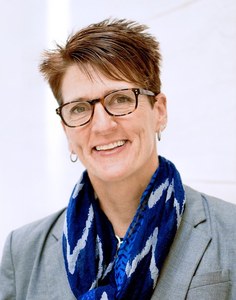 Portrait: Buck Institute for Research on Aging
By 2008 two things were established separately: dietary restriction extends lifespan partly by lowering TOR, and lowering TOR releases autophagy. Whether the second explained the first had only begun to be tested: in 2007 Jia and Levine reported that autophagy genes are needed for the long life of eat-2 dietary-restriction mutants. Hansen tested it directly in C. elegans by knocking down the genes autophagy needs, and found that both dietary restriction and TOR inhibition stopped extending lifespan when autophagy was blocked.
The same paper is unusually careful about the opposite claim. Long-lived daf-2 insulin/IGF-1 receptor mutants need both autophagy and the transcription factor DAF-16/FOXO, yet autophagy still runs in animals lacking DAF-16 — and those animals are not long-lived. So autophagy is necessary and not sufficient: it supplies the raw material, and something else has to decide what the cell builds from it.
Her laboratory at the Buck works on the same question at a finer grain: how autophagy is regulated in specific tissues, how it changes with age, and what the standard readouts do and do not measure. She has been Chief Scientific Officer there since 2021.
Milestones in the Atlas
A selection, not a full bibliography: only papers that meet the Atlas inclusion criteria.
| Year | Evidence | Study |
|---|---|---|
| 2007 | A | Lifespan extension by conditions that inhibit translation in Caenorhabditis elegans HAN2007 First author: lowering protein synthesis in C. elegans, by knocking down ribosomal proteins, the S6 kinase rsks-1 or translation-initiation factors, extended lifespan and raised heat-stress resistance, much as TOR inhibition does. |
| 2008 | A | A role for autophagy in the extension of lifespan by dietary restriction in C. elegans HAN2008 First author: blocking autophagy genes abolishes the lifespan extension produced by dietary restriction and by TOR inhibition, but autophagy alone is not sufficient. |
| 2010 | M | Phosphorylation of ULK1 (hATG1) by AMP-activated protein kinase connects energy sensing to mitophagy EGA2010 AMPK directly phosphorylates ULK1 to connect energy sensing to autophagy/mitophagy, opposing mTOR. |
Co-authors in the Atlas 10
People with a profile here who share at least one study with Malene Hansen.
ShowHide
- Cynthia Kenyon 2 shared studies Showed in 1993 that a single-gene change doubles the lifespan of the worm C. elegans, which opened the study of nutrient-sensing pathways as ageing pathways
- Benoit Viollet Showed that metformin still lowers liver glucose production without AMPK or LKB1, pointing instead to a drop in cellular energy charge
- Dana M. Gwinn First author of the 2008 study showing that the energy sensor AMPK switches off mTORC1 by phosphorylating raptor
- Daniel F. Egan Showed as first author that AMPK directly phosphorylates ULK1, linking low cellular energy to autophagy and mitophagy, and contributed to the finding that AMPK brakes mTORC1 by phosphorylating raptor
- David B. Shackelford Cancer biologist at UCLA who studies lung tumours that have lost the LKB1 tumour suppressor, the upstream activator of AMPK, and who trained in Reuben Shaw's lab at the Salk Institute
- John M. Asara Mass-spectrometry specialist whose core facility supplied metabolomics and proteomics for several mTOR studies, including measurements of purine, pyrimidine and SAM metabolism downstream of mTORC1.
- Maria M. Mihaylova Studies how intestinal stem cells change with age and how diet shapes their metabolism
- Mondira Kundu Physician-scientist who works out what the autophagy-initiating kinases ULK1 and ULK2 actually do when a cell runs short of fuel
- Monica Driscoll Studies the biology of ageing in the roundworm C. elegans, including interventions that extend healthspan and the mechanisms that protect neurons from damage.
- Reuben J. Shaw Showed, in parallel with two other groups, that the tumour suppressor LKB1 directly activates AMPK, and that AMPK brakes mTORC1 by phosphorylating raptor. His Salk lab also linked AMPK to autophagy through ULK1 and helped explain how metformin acts in the liver
Every researcher with a profile →
On the programme
Meetings in the Atlas calendar where Malene Hansen is listed among the speakers or organisers.
- past CSHL: Protein Homeostasis in Health and Disease 2026 (17th) ↗ 21–25 Apr 2026 ·
 Cold Spring Harbor, NY, USA · ★
All meetings in the calendar →
Thank you. That helps us know which pages have been read by someone who knows the work.
Thank you. We will check it and correct the page.
Thank you. Your answer was counted anonymously.