Daniele Stracka
Co-author of two studies from Michael Hall's laboratory in Basel that placed mTORC2, the second mTOR complex, at the ribosome and at contact sites between the endoplasmic reticulum and mitochondria
Biozentrum, University of Basel (Hall laboratory, papers 2011–2015)
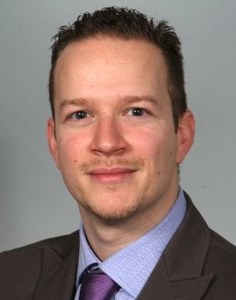 Portrait: LinkedIn
Daniele Stracka is second author on two Atlas studies from Michael Hall's group at the Biozentrum in Basel. The 2011 paper in Cell (ZIN2011) showed that mTORC2, the rapamycin-insensitive mTOR complex, is switched on when it binds the ribosome, the cell's protein factory, downstream of the growth signal PI3K. The 2013 paper in PNAS (BET2013) found that mTORC2 and its target Akt also sit at mitochondria-associated membranes, the contact points between the endoplasmic reticulum and mitochondria, where they help control how mitochondria work. Both studies are experiments in cells.
PubMed lists four papers under this name, all from the Biozentrum in Basel and all with the given name Daniele. The two Atlas studies themselves give no affiliation for him. The Basel link comes from the two other papers, so the evidence for the identity rests on the rare surname, the same given name and the same laboratory head in all four. No official page or current position was found.
Milestones in the Atlas
A selection, not a full bibliography: only papers that meet the Atlas inclusion criteria.
| Year | Evidence | Study |
|---|---|---|
| 2011 | M | Activation of mTORC2 by association with the ribosome ZIN2011 Second author of the paper showing that mTORC2 is activated by association with the ribosome. |
| 2013 | M | mTOR complex 2-Akt signaling at mitochondria-associated endoplasmic reticulum membranes (MAM) regulates mitochondrial physiology BET2013 Second author of the paper placing mTORC2-Akt signalling at mitochondria-associated ER membranes. |
Co-authors in the Atlas 3
People with a profile here who share at least one study with Daniele Stracka.
ShowHide
- Michael N. Hall 2 shared studies Discovered TOR in yeast in 1991 and established it as a central controller of cell growth that responds to nutrients. His lab later showed that TOR works in two distinct complexes, TORC1 and TORC2, only one of which is blocked by rapamycin
- Charles Betz Traced mTORC2 to a specific address inside the cell — the mitochondria-ER contact site
- Vittoria Zinzalla Cell biologist who, in Michael Hall's Basel lab, found that mTORC2 is switched on by binding to ribosomes, and later moved to cancer pharmacology at Boehringer Ingelheim in Vienna
Every researcher with a profile →
Thank you. That helps us know which pages have been read by someone who knows the work.
Thank you. We will check it and correct the page.
Thank you. Your answer was counted anonymously.