Corinna Ross
Primate biologist at Texas Biomedical Research Institute who uses the common marmoset to test whether drugs such as rapamycin can protect health during aging
Professor and Principal Investigator, Texas Biomedical Research Institute · Associate Director for Research, Southwest National Primate Research Center · earlier at the Barshop Institute, UT Health San Antonio, and Texas A&M University San Antonio (PubMed affiliation 2014–2016) · postdoc in the Biology of Aging, UT Health San Antonio · PhD in Biological Sciences, University of Nebraska-Lincoln (2005)
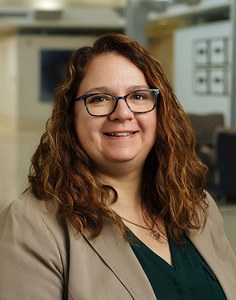 Portrait: Texas Biomedical Research Institute
Rapamycin extends life in mice, but no one knows yet whether it does the same in primates. The common marmoset, a small South American monkey that lives about 10 to 15 years, is a practical test case. Corinna Ross was first author of the 2015 Atlas study (ROS2015) on long-term oral rapamycin in marmosets. Body weight, daily activity, blood fats and glucose handling barely changed, so the metabolic side effects that worry people about the drug were small in these animals. In the liver, one enzyme that makes glucose (G6Pase) became less active.
Ross is also a co-author of the 2014 study that first worked out how to dose rapamycin in marmosets (TAR2014) and of the 2016 study on proteasome and autophagy changes in the same animals (LEL2016). These three papers belong to a longer San Antonio project that set up the marmoset as a model for testing anti-aging drugs.
Ross studied biology at Cornell University and the University of Nebraska Omaha, earned a PhD in biological sciences at the University of Nebraska-Lincoln in 2005, and trained as a postdoctoral Biology of Aging fellow at UT Health San Antonio. At the time of these studies PubMed lists Ross at the Barshop Institute and at Texas A&M University San Antonio. Ross now runs a laboratory as Professor at Texas Biomedical Research Institute and is Associate Director for Research at the Southwest National Primate Research Center, still using marmosets to study interventions for healthy aging.
Milestones in the Atlas
A selection, not a full bibliography: only papers that meet the Atlas inclusion criteria.
| Year | Evidence | Study |
|---|---|---|
| 2014 | A | Testing efficacy of administration of the antiaging drug rapamycin in a nonhuman primate, the common marmoset. TAR2014 Co-author: part of the team that first described rapamycin dosing, blood levels and mTORC1 inhibition in marmosets. |
| 2015 | A | Metabolic consequences of long-term rapamycin exposure on common marmoset monkeys (Callithrix jacchus). ROS2015 First author: showed that long-term oral rapamycin had only minor metabolic effects in common marmosets. |
| 2016 | A | Pharmaceutical inhibition of mTOR in the common marmoset: effect of rapamycin on regulators of proteostasis in a non-human primate. LEL2016 Co-author: contributed marmoset tissue work to the study of proteasome, chaperone and autophagy changes under rapamycin. |
Co-authors in the Atlas 4
People with a profile here who share at least one study with Corinna Ross.
ShowHide
- Adam B. Salmon 3 shared studies Biologist of aging at UT Health San Antonio whose work in this Atlas spans rapamycin in mice and in common marmosets. He is a co-author on the Interventions Testing Program reports from the San Antonio site and on the marmoset rapamycin studies on blood markers, epigenetic age and the salivary gland
- Suzette Tardif 3 shared studies Primate biologist who spent more than 30 years developing the common marmoset as a research model, and who led the first studies of rapamycin dosing and safety in this small monkey
- Elizabeth Fernandez 2 shared studies Aging researcher at the Barshop Institute in San Antonio who has worked on rapamycin studies in mice and common marmosets, including the NIA Interventions Testing Program
- Matthew Lelegren First author of a 2016 study of how rapamycin changes the protein-quality-control machinery in marmoset liver, muscle and fat, carried out in Adam Salmon's group in San Antonio
Every researcher with a profile →
Thank you. That helps us know which pages have been read by someone who knows the work.
Thank you. We will check it and correct the page.
Thank you. Your answer was counted anonymously.