Benjamin E. Turk
Kinase biochemist who studies how protein kinases choose their substrates; co-author on the discovery that AMPK phosphorylates raptor and on the study showing that mTORC1 sites differ in intrinsic substrate quality.
Professor of Pharmacology, Yale School of Medicine · PhD, Massachusetts Institute of Technology (1999) · BA, Oberlin College (1990)
Turk Lab, Department of Pharmacology, Yale School of Medicine (New Haven, Connecticut, USA) ↗ ORCID0000-0001-9275-4069 ↗
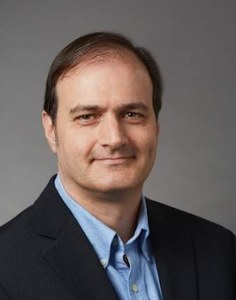 Portrait: Yale School of Medicine
Turk co-authored the Shaw-lab study that used a proteomic and bioinformatic search for AMPK substrates and found that AMPK directly phosphorylates raptor to shut down mTORC1 under energy stress (GWI2008). He was also a co-author on the Sabatini-lab study showing that mTORC1 phosphorylates peptides from its substrates at very different rates, and that this 'substrate quality' predicts which sites resist rapamycin and starvation (KAN2013).
Turk received his PhD from MIT in 1999 and is Professor of Pharmacology at Yale School of Medicine. His lab uses peptide arrays, phage display and phosphoproteomics to learn how kinases recognise sequence motifs and how these signalling networks are rewired in cancer.
Milestones in the Atlas
A selection, not a full bibliography: only papers that meet the Atlas inclusion criteria.
| Year | Evidence | Study |
|---|---|---|
| 2008 | M | AMPK phosphorylation of raptor mediates a metabolic checkpoint GWI2008 Co-author: AMPK directly phosphorylates raptor, a second route by which energy stress halts mTORC1. |
| 2013 | M | mTORC1 phosphorylation sites encode their sensitivity to starvation and rapamycin KAN2013 Co-author: mTORC1 phosphorylation sites differ in intrinsic substrate quality, which sets their rapamycin sensitivity. |
Co-authors in the Atlas
People with a profile here who share at least one study with Benjamin E. Turk.
- Dana M. Gwinn First author of the 2008 study showing that the energy sensor AMPK switches off mTORC1 by phosphorylating raptor
- Daniel F. Egan Showed as first author that AMPK directly phosphorylates ULK1, linking low cellular energy to autophagy and mitophagy, and contributed to the finding that AMPK brakes mTORC1 by phosphorylating raptor
- David M. Sabatini Identified mTOR (as RAFT1) in 1994. His lab then mapped much of the machinery around it: raptor and rictor at the core of mTORC1 and mTORC2, the Rag–Ragulator system that docks mTORC1 on the lysosome, and the sensors that detect leucine, arginine and SAM
- Maria M. Mihaylova Studies how intestinal stem cells change with age and how diet shapes their metabolism
- Michael B. Yaffe Cancer biologist and physician-scientist known for working out how phosphorylation creates binding sites on proteins, including the 14-3-3 family of phosphoserine/threonine-binding proteins, and how kinases choose their targets.
- Reuben J. Shaw Showed, in parallel with two other groups, that the tumour suppressor LKB1 directly activates AMPK, and that AMPK brakes mTORC1 by phosphorylating raptor. His Salk lab also linked AMPK to autophagy through ULK1 and helped explain how metformin acts in the liver
- Seong A. Kang Contributed to the Sabatini-lab studies that identified PRAS40 and DEPTOR, two of the cell's own mTOR inhibitors, and to the first characterisation of the mTOR inhibitor Torin1
Every researcher with a profile →
Thank you. Your answer was counted anonymously.
Thank you. That helps us know which pages have been read by someone who knows the work.
Thank you. We will check it and correct the page.