Michael B. Yaffe
Cancer biologist and physician-scientist known for working out how phosphorylation creates binding sites on proteins, including the 14-3-3 family of phosphoserine/threonine-binding proteins, and how kinases choose their targets.
David H. Koch Professor in Science and Biological Engineering, MIT · Director, MIT Center for Precision Cancer Medicine · Intramural Faculty, Koch Institute · Margaret MacVicar Faculty Fellow · Fellow, Association of American Physicians (2021)
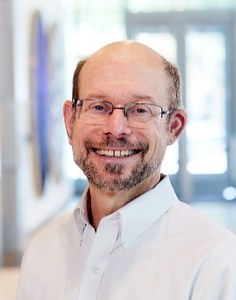 Portrait: MIT Department of Biology
Michael Yaffe is both a physician and a biochemist, and he has spent his career on one question: how does a cell read a phosphate tag? Adding a phosphate group to a protein is the main way kinases such as mTOR pass messages, but the tag only matters if something reads it. Yaffe's work on the 14-3-3 proteins and on the short sequence patterns that kinases prefer helped show how those messages are read and routed.
That background made him a natural partner for the Sabatini laboratory in the 2013 Science study in the Atlas. The team asked why some mTORC1 phosphorylation sites stay switched on when the kinase is partly blocked by rapamycin or starvation, while others switch off first. The answer was that each site has its own built-in quality as a substrate, so a single level of mTORC1 activity can give different outputs depending on the target.
Today Yaffe is a professor at MIT and a member of the Koch Institute, where he also directs the MIT Center for Precision Cancer Medicine. His group studies how cancer cells and the immune system respond to DNA damage and drug treatment through signalling networks.
Milestones in the Atlas
A selection, not a full bibliography: only papers that meet the Atlas inclusion criteria.
| Year | Evidence | Study |
|---|---|---|
| 2013 | M | mTORC1 phosphorylation sites encode their sensitivity to starvation and rapamycin KAN2013 Co-author with the Sabatini group on the finding that mTORC1 phosphorylation sites encode their own sensitivity to starvation and rapamycin. |
Co-authors in the Atlas
People with a profile here who share at least one study with Michael B. Yaffe.
- Benjamin E. Turk Kinase biochemist who studies how protein kinases choose their substrates; co-author on the discovery that AMPK phosphorylates raptor and on the study showing that mTORC1 sites differ in intrinsic substrate quality.
- David M. Sabatini Identified mTOR (as RAFT1) in 1994. His lab then mapped much of the machinery around it: raptor and rictor at the core of mTORC1 and mTORC2, the Rag–Ragulator system that docks mTORC1 on the lysosome, and the sensors that detect leucine, arginine and SAM
- Seong A. Kang Contributed to the Sabatini-lab studies that identified PRAS40 and DEPTOR, two of the cell's own mTOR inhibitors, and to the first characterisation of the mTOR inhibitor Torin1
Every researcher with a profile →
Thank you. Your answer was counted anonymously.
Thank you. That helps us know which pages have been read by someone who knows the work.
Thank you. We will check it and correct the page.