Xiaomeng Long
Discovered that Rheb binds directly to the mTOR kinase domain and switches it on
Adjunct Faculty, Baccalaureate Biology, St. Petersburg College, Florida · earlier Research Scientist, Frederick National Laboratory for Cancer Research; QIAGEN; Immunologix Laboratories · research staff, Avruch lab, MGH/Harvard (2002–2009) · PhD in Biochemistry, Brandeis University (Leslie Griffith lab)
Avruch Lab, Massachusetts General Hospital / Harvard Medical School (Boston, Massachusetts, USA) ↗
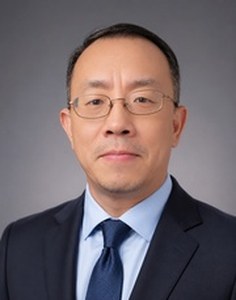 Portrait: St. Petersburg College
By 2005 (LON2005), Long showed Rheb binds straight onto the mTOR kinase domain and that binding stimulates catalytic activity — a physical, mechanistic link between GTPase and kinase.
After the Avruch lab he moved into applied and industry research (Immunologix Laboratories, QIAGEN, then the Frederick National Laboratory for Cancer Research) and now teaches biology at St. Petersburg College in Florida, according to his college profile, which lists the Raptor and Rheb papers among his publications.
Milestones in the Atlas
A selection, not a full bibliography: only papers that meet the Atlas inclusion criteria.
| Year | Evidence | Study |
|---|---|---|
| 2002 | M | Raptor, a binding partner of target of rapamycin (TOR), mediates TOR action HARA2002 Co-author of one of the two 2002 papers that identified raptor (Avruch/Yonezawa collaboration). |
| 2005 | M | Rheb binds and regulates the mTOR kinase LON2005 Rheb binds directly to the mTOR kinase domain and stimulates its activity. |
Co-authors in the Atlas 6
People with a profile here who share at least one study with Xiaomeng Long.
ShowHide
- Joseph Avruch 2 shared studies Showed in 1998 that amino acids, not only insulin, are needed for mTOR to activate S6K1 and 4E-BP1. His Massachusetts General Hospital group, with Kazuyoshi Yonezawa's lab in Kobe, then co-discovered raptor in 2002 and found that Rheb binds mTOR directly
- Kazuyoshi Yonezawa 2 shared studies Led the Kobe University group that co-discovered raptor in 2002, in parallel with the Sabatini lab. His team then showed that raptor binds mTOR's substrates through their TOS motif and that PRAS40 is itself an mTORC1 substrate
- Chiharu Tokunaga Member of Kazuyoshi Yonezawa's Kobe team that co-discovered raptor, and first author of a 2004 review on how mTOR combines amino acid and energy signals
- Kenta Hara Showed in 1998 that amino acids are needed for mTOR to activate S6K1 and 4E-BP1, and as first author co-discovered raptor in 2002
- Noriko Oshiro-Rapley In one of several 2007 studies, identified PRAS40 as a raptor-bound mTORC1 substrate that gates access to mTORC1's other substrates
- Sujuti Hidayat Member of Kazuyoshi Yonezawa's Kobe team that co-discovered raptor and worked out how mTOR senses amino acids, and first author of a study showing that a leucine derivative can block amino acid-mTOR signalling
Every researcher with a profile →
Thank you. That helps us know which pages have been read by someone who knows the work.
Thank you. We will check it and correct the page.
Thank you. Your answer was counted anonymously.