Sujuti Hidayat
Member of Kazuyoshi Yonezawa's Kobe team that co-discovered raptor and worked out how mTOR senses amino acids, and first author of a study showing that a leucine derivative can block amino acid-mTOR signalling
Biosignal Research Center, Kobe University, Kazuyoshi Yonezawa group (PubMed records 2000–2006, at the time of the studies)
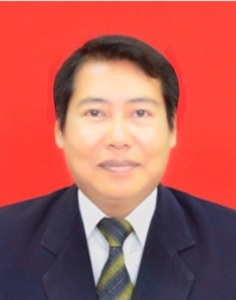 Portrait: Faculty of Medicine, Universitas Brawijaya
In 2002 two teams, one in Boston and one in Kobe, reported raptor, the partner protein that defines mTORC1, the growth-control complex. Sujuti Hidayat is a co-author of the Kobe paper in Cell (HARA2002). It showed that raptor is needed for mTOR to act on 4E-BP1 and S6 kinase, two proteins that control protein synthesis, and that silencing raptor in the worm C. elegans mimics loss of TOR. Hidayat is also a co-author of the 2003 follow-up (NOJ2003) showing that raptor holds these targets through a short TOS motif.
Hidayat's own first-author paper from the same group, published in 2003, tested a chemical cousin of the amino acid leucine. It blocked the amino acid signal to mTOR in human Jurkat cells, a line of immune cells, and stopped them in the G1 phase of the cell cycle. That study lists Hidayat at the Biosignal Research Center of Kobe University.
PubMed records place Hidayat in the Yonezawa group from 2000 to 2006, on papers about the tail region of mTOR that the enzyme needs to work (2000), about how the Hsp90 inhibitor geldanamycin disrupts the mTOR-raptor pathway (2006), and about the two motifs of 4E-BP1 that bind raptor (2006). A current position could not be confirmed.
Milestones in the Atlas
A selection, not a full bibliography: only papers that meet the Atlas inclusion criteria.
| Year | Evidence | Study |
|---|---|---|
| 2002 | M | Raptor, a binding partner of target of rapamycin (TOR), mediates TOR action HARA2002 Co-author: part of the Kobe team that co-discovered raptor and showed it is needed for mTOR to act on 4E-BP1 and S6 kinase. |
| 2003 | M | The mammalian target of rapamycin (mTOR) partner, raptor, binds the mTOR substrates p70 S6 kinase and 4E-BP1 through their TOR signaling (TOS) motif NOJ2003 Co-author: contributed to the study showing that raptor binds mTOR substrates through their TOS motif. |
Co-authors in the Atlas 7
People with a profile here who share at least one study with Sujuti Hidayat.
ShowHide
- Chiharu Tokunaga 2 shared studies Member of Kazuyoshi Yonezawa's Kobe team that co-discovered raptor, and first author of a 2004 review on how mTOR combines amino acid and energy signals
- Joseph Avruch 2 shared studies Showed in 1998 that amino acids, not only insulin, are needed for mTOR to activate S6K1 and 4E-BP1. His Massachusetts General Hospital group, with Kazuyoshi Yonezawa's lab in Kobe, then co-discovered raptor in 2002 and found that Rheb binds mTOR directly
- Kazuyoshi Yonezawa 2 shared studies Led the Kobe University group that co-discovered raptor in 2002, in parallel with the Sabatini lab. His team then showed that raptor binds mTOR's substrates through their TOS motif and that PRAS40 is itself an mTORC1 substrate
- Kenta Hara 2 shared studies Showed in 1998 that amino acids are needed for mTOR to activate S6K1 and 4E-BP1, and as first author co-discovered raptor in 2002
- Noriko Oshiro-Rapley 2 shared studies In one of several 2007 studies, identified PRAS40 as a raptor-bound mTORC1 substrate that gates access to mTORC1's other substrates
- Hiroki Nojima First author of the 2003 Kobe study showing that raptor grabs mTOR's targets through a short TOS motif, the docking step that lets mTORC1 reach its substrates
- Xiaomeng Long Discovered that Rheb binds directly to the mTOR kinase domain and switches it on
Every researcher with a profile →
Thank you. That helps us know which pages have been read by someone who knows the work.
Thank you. We will check it and correct the page.
Thank you. Your answer was counted anonymously.