Walter W. Chen
Co-author of the 2017 Cell paper showing that SLC38A9 releases essential amino acids from lysosomes to switch on mTORC1
Instructor, Department of Pediatrics, UT Southwestern Medical Center · Fellowship in Neonatal-Perinatal Medicine, UT Southwestern (2024) · Pediatrics residency, Boston Children's Hospital (2021) · Harvard Medical School M.D.-Ph.D. Program · Whitehead Institute and MIT (2017)
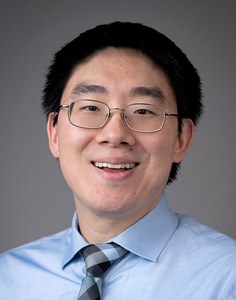 Portrait: Children's Medical Center Research Institute at UT Southwestern
The Atlas study from 2017 asked what the lysosome, the cell's recycling compartment, does for mTORC1, the growth-control complex. The authors showed that a lysosomal membrane protein called SLC38A9 senses the amino acid arginine and pushes essential amino acids such as leucine out of the lysosome. That leucine then helps switch mTORC1 on. The work used human cells and mice, and pancreatic cancer cells that live on protein they take in from outside needed SLC38A9 to form tumors.
Walter W. Chen is a middle author on this paper. PubMed lists him at the Whitehead Institute, MIT, the Koch Institute and the Broad Institute in Cambridge, and in the Harvard Medical School M.D.-Ph.D. Program. A Whitehead news item describes him as a graduate student in David Sabatini's lab who later became a pediatrics resident, and a UT Southwestern page lists a PhD from MIT in 2016, Harvard Medical School in 2018, pediatrics residency at Boston Children's Hospital in 2021 and a neonatal-perinatal fellowship at UT Southwestern in 2024. The same page gives his current title as Instructor in Pediatrics. His PubMed record also shows several other papers from the Sabatini group on cancer and mitochondrial metabolism.
Milestones in the Atlas
A selection, not a full bibliography: only papers that meet the Atlas inclusion criteria.
| Year | Evidence | Study |
|---|---|---|
| 2017 | M | mTORC1 Activator SLC38A9 Is Required to Efflux Essential Amino Acids from Lysosomes and Use Protein as a Nutrient WYA2017 Middle author of the SLC38A9 paper, listed at the Whitehead Institute and the Harvard Medical School M.D.-Ph.D. Program. |
Co-authors in the Atlas 5
People with a profile here who share at least one study with Walter W. Chen.
ShowHide
- David M. Sabatini Identified mTOR (as RAFT1) in 1994. His lab then mapped much of the machinery around it: raptor and rictor at the core of mTORC1 and mTORC2, the Rag–Ragulator system that docks mTORC1 on the lysosome, and the sensors that detect leucine, arginine and SAM
- Elizaveta Freinkman Chemist and mass-spectrometry specialist at the Whitehead Institute who measured metabolites for many studies of nutrient sensing and cancer metabolism, including the lysosome amino acid work behind two Atlas papers
- Gregory A. Wyant Showed that the lysosomal protein SLC38A9 exports leucine and other essential amino acids out of the lysosome, letting cells grow on proteins they have taken up and broken down there
- Monther Abu-Remaileh Worked out how to isolate lysosomes fast enough to measure what is inside them, and found that mTOR controls what gets out
- Rachel L. Wolfson Identified Sestrin2 as the direct leucine sensor of the mTORC1 pathway as a Sabatini-lab MD-PhD student. She also co-discovered KICSTOR, the complex that recruits GATOR1 to the lysosome
Every researcher with a profile →
Thank you. That helps us know which pages have been read by someone who knows the work.
Thank you. We will check it and correct the page.
Thank you. Your answer was counted anonymously.