T. Keith Blackwell
Geneticist who uses the worm C. elegans to study how the SKN-1/Nrf stress-response factor, insulin signaling and TOR shape stress resistance and lifespan.
Professor of Genetics, Joslin Diabetes Center and Harvard Medical School
Blackwell Lab, Joslin Diabetes Center, Harvard Medical School (Boston, Massachusetts, USA) ↗
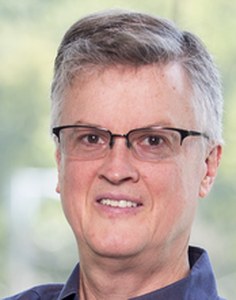 Portrait: Harvard Medical School
Keith Blackwell is a professor of genetics at the Joslin Diabetes Center and Harvard Medical School in Boston. His lab uses the roundworm C. elegans to study how organisms defend themselves against environmental and metabolic stress, and how those defenses affect aging.
Much of the work centers on SKN-1, the worm relative of the human Nrf stress-response proteins. The 2012 Cell Metabolism paper in the Atlas, led by Stacey Robida-Stubbs, asked how TOR signaling affects lifespan. When TORC1 was inhibited genetically, SKN-1 and DAF-16/FoxO activated protective genes and the worms lived longer.
Rapamycin extended worm lifespan through SKN-1 but not DAF-16, which the authors think is because it also interferes with TORC2.
Milestones in the Atlas
A selection, not a full bibliography: only papers that meet the Atlas inclusion criteria.
| Year | Evidence | Study |
|---|---|---|
| 2012 | A | TOR signaling and rapamycin influence longevity by regulating SKN-1/Nrf and DAF-16/FoxO ROB2012 In C. elegans, TORC1 inhibition extends lifespan via SKN-1/Nrf and DAF-16/FoxO, while rapamycin's effect needs SKN-1 but not DAF-16, apparently because it also affects TORC2; Blackwell is senior (last) author. |
Co-authors in the Atlas 3
People with a profile here who share at least one study with T. Keith Blackwell.
ShowHide
- David M. Sabatini Identified mTOR (as RAFT1) in 1994. His lab then mapped much of the machinery around it: raptor and rictor at the core of mTORC1 and mTORC2, the Rag–Ragulator system that docks mTORC1 on the lysosome, and the sensors that detect leucine, arginine and SAM
- Dudley W. Lamming Showed as a postdoc that rapamycin's harm to glucose metabolism comes largely from its effect on mTORC2, while the lifespan benefit tracks mTORC1. His Wisconsin lab studies intermittent rapamycin dosing and how restricting dietary protein or single amino acids affects metabolism and ageing
- Stacey Robida-Stubbs Researcher in Keith Blackwell's worm lab at the Joslin Diabetes Center who showed that TOR inhibition and rapamycin extend C. elegans lifespan through the protective factors SKN-1/Nrf and DAF-16/FoxO
Every researcher with a profile →
Thank you. That helps us know which pages have been read by someone who knows the work.
Thank you. We will check it and correct the page.
Thank you. Your answer was counted anonymously.