Stanley Fields
Technology-driven geneticist whose yeast screens helped show that lowering TOR signaling extends chronological lifespan in yeast
Professor Emeritus of Genome Sciences, University of Washington School of Medicine
Fields Lab, Department of Genome Sciences, University of Washington (Seattle, Washington, USA) ↗ Lab lineage1 direct trainee →
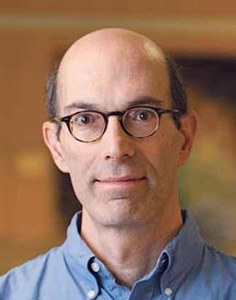 Portrait: University of Washington Department of Genome Sciences
Stanley Fields is a professor emeritus in the Department of Genome Sciences at the University of Washington. His faculty page says his lab works on developing new technologies, based on the idea that a good new method can open many areas of biology. The lab often uses baker's yeast as a test system and has applied its methods to topics including aging, cancer-associated proteins and malaria.
The 2006 paper, led by first author R. Wilson Powers, used that approach on aging. Yeast cells that sit in a dish without dividing can stay alive for a while, and the length of that time is called chronological lifespan. The team built a high-throughput assay and measured it for about 4,800 yeast strains, each missing one gene.
Several of the longest-lived strains had mutations in the TOR pathway. Rapamycin and another TOR-inhibiting compound also extended lifespan, and removing certain amino acids from the medium did too. The authors proposed that lower TOR signaling triggers a stress-resistance response that helps cells survive longer, an idea that connected TOR to calorie restriction.
Milestones in the Atlas
A selection, not a full bibliography: only papers that meet the Atlas inclusion criteria.
| Year | Evidence | Study |
|---|---|---|
| 2005 | M | Regulation of yeast replicative life span by TOR and Sch9 in response to nutrients KAE2005 A systematic screen of 564 yeast gene deletions found 10 deletions that extend replicative lifespan; genes of the nutrient-responsive TOR and Sch9 pathways were the most frequent hits (6 of 10). |
| 2006 | M | Extension of chronological life span in yeast by decreased TOR pathway signaling POW2006 Screened about 4,800 yeast deletion strains and found that decreased TOR pathway signaling, genetic or by rapamycin, extends chronological lifespan; Fields is the senior author. |
Co-authors in the Atlas 3
People with a profile here who share at least one study with Stanley Fields.
ShowHide
- Brian K. Kennedy 2 shared studies Showed with Matt Kaeberlein that reducing TOR or Sch9 signalling extends yeast lifespan in the same way as dietary restriction, and has since championed mTOR as a target for slowing human ageing
- Matt Kaeberlein 2 shared studies Extended TOR/aging research from yeast to mice to pet dogs
- R Wilson Powers Molecular biologist who, as a PhD student in Seattle, built high-throughput lifespan screens in yeast and showed that lowering TOR signalling extends chronological lifespan, and who later became a patent attorney
Thank you. That helps us know which pages have been read by someone who knows the work.
Thank you. We will check it and correct the page.
Thank you. Your answer was counted anonymously.