Pazit Polak
Cell biologist from Michael Hall's Basel lab who showed, in mice, that switching off mTORC1 in fat tissue alone makes animals lean and protects them from diet-induced obesity
Biozentrum, University of Basel, Michael N. Hall lab (2006–2012, at the time of the study) · current position not confirmed
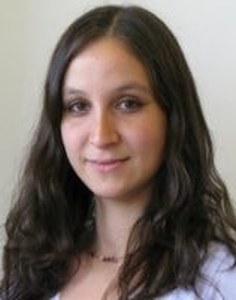 Portrait: LinkedIn
mTORC1, the growth-control complex built around the mTOR kinase, needs a partner protein called raptor to work. In 2008 Pazit Polak and colleagues in Michael Hall's lab removed raptor only in the fat cells of mice. The animals stayed lean, resisted weight gain on a high-fat diet and handled insulin better. Their fat tissue burned more energy because its mitochondria were more uncoupled, meaning they released energy as heat instead of storing it. The study showed that mTORC1 in one tissue, fat, can shape the metabolism of the whole body. It is a mouse result and says nothing direct about people.
Polak worked at the Biozentrum of the University of Basel throughout these papers. With Hall, Polak wrote a 2006 commentary on how mTORC2 activates the kinase Akt with the help of its subunit SIN1, and a 2009 review on how mTOR controls metabolism across the whole body. Polak is also a co-author of a 2007 study that identified PRAS40 and PRR5-like protein as new mTOR partners, of a 2009 study on mice lacking rictor (the core mTORC2 subunit) in fat, and of the 2012 liver mTORC2 paper.
A current position for Pazit Polak could not be confirmed from an official source.
Milestones in the Atlas
A selection, not a full bibliography: only papers that meet the Atlas inclusion criteria.
| Year | Evidence | Study |
|---|---|---|
| 2008 | A | Adipose-specific knockout of raptor results in lean mice with enhanced mitochondrial respiration POL2008 First author: removed raptor from fat cells of mice and found lean, insulin-sensitive animals with more uncoupled mitochondria in their fat. |
Co-authors in the Atlas 3
People with a profile here who share at least one study with Pazit Polak.
ShowHide
- Markus A. Rüegg Neurobiologist at the Biozentrum of the University of Basel who studies how muscles and the nerve connections that drive them develop, age and fail, including the role of mTOR signalling in muscle.
- Michael N. Hall Discovered TOR in yeast in 1991 and established it as a central controller of cell growth that responds to nutrients. His lab later showed that TOR works in two distinct complexes, TORC1 and TORC2, only one of which is blocked by rapamycin
- Nadine Cybulski Cell biologist from Michael Hall's Basel lab who showed that mTORC2 in fat tissue helps control how big the whole body grows
Every researcher with a profile →
Thank you. That helps us know which pages have been read by someone who knows the work.
Thank you. We will check it and correct the page.
Thank you. Your answer was counted anonymously.