Matthew R. Janes
Showed, as first author in David Fruman's lab, that a dual TORC1/2 kinase inhibitor kills leukemia cells with much weaker effects on normal lymphocytes than rapamycin
Discovery scientist, Wellspring Biosciences (2011–present; KRAS G12C drug discovery) · graduate research, UC Irvine (David A. Fruman lab)
Wellspring Biosciences, Inc. (San Diego, California, USA) ↗
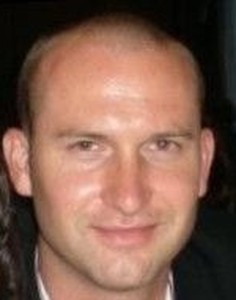 Portrait: The Org profile (Wellspring Biosciences)
As grad researcher, showed PP242 (dual TORC1/2 inhibitor) kills leukemia cells while sparing normal lymphocytes (JAN2010) — unlike rapamycin. Contributed to Hsieh/Ruggero's ribosome-profiling study of oncogenic mTOR in prostate cancer (HSI2012).
Moved into industry, first author on the ARS-1620 paper (Cell 2018), a landmark covalent KRAS-G12C inhibitor. Still active at Wellspring on KRAS-G12C programs into 2026, including combinations with mTOR/IGF1R inhibition.
Milestones in the Atlas
A selection, not a full bibliography: only papers that meet the Atlas inclusion criteria.
| Year | Evidence | Study |
|---|---|---|
| 2010 | M | Effective and selective targeting of leukemia cells using a TORC1/2 kinase inhibitor JAN2010 PP242 selectively kills leukemia cells while sparing normal lymphocytes. |
| 2012 | M | The translational landscape of mTOR signalling steers cancer initiation and metastasis HSI2012 Contributed to showing oncogenic mTOR drives prostate cancer metastasis via selective translation. |
Co-authors in the Atlas 6
People with a profile here who share at least one study with Matthew R. Janes.
ShowHide
- Andrew C. Hsieh Showed, as first author in Davide Ruggero's lab, that oncogenic mTOR drives cancer metastasis by selectively translating a specific pro-invasion mRNA program
- David A. Fruman Immunologist and cancer biologist who studies PI3K and mTOR signaling in lymphocytes and leukemia cells and the drugs that target them.
- Davide Ruggero Showed that oncogenic mTOR signalling reprograms which mRNAs are translated, and that tumours become addicted to this through the 4E-BP–eIF4E axis. His UCSF lab found that mTOR-driven translation of a specific set of mRNAs promotes prostate cancer invasion and metastasis
- Kevan M. Shokat Co-developed the ATP-competitive 'TORKinib' mTOR inhibitors that block both mTORC1 and mTORC2, and later, with Neal Rosen's lab at Memorial Sloan Kettering, RapaLink-1, a third-generation inhibitor that overcomes mTOR resistance mutations
- Nicholas T. Ingolia Known for ribosome profiling, a method that reads out which messenger RNAs ribosomes are translating across a whole genome; the study in the Atlas used this approach to map mTOR-controlled translation in prostate cancer.
- Yi Liu Drug-discovery scientist who builds selective kinase inhibitors, including the active-site mTOR inhibitor INK128
Every researcher with a profile →
Thank you. That helps us know which pages have been read by someone who knows the work.
Thank you. We will check it and correct the page.
Thank you. Your answer was counted anonymously.