David A. Fruman
Immunologist and cancer biologist who studies PI3K and mTOR signaling in lymphocytes and leukemia cells and the drugs that target them.
Professor and Chair, Molecular Biology and Biochemistry, UC Irvine · Director, UCI Cancer Research Institute
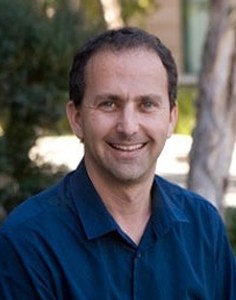 Portrait: University of California, Irvine
David Fruman is a professor and chair of the Department of Molecular Biology and Biochemistry at the University of California, Irvine, and directs the UCI Cancer Research Institute. His lab studies the signals that control growth and survival in immune cells and blood cancers.
A main theme is the PI3K/mTOR pathway and how it controls protein production in lymphocytes. The 2010 Nature Medicine paper in the Atlas, led by Matthew Janes, tested PP242, a drug that blocks the active site of mTOR and so inhibits both mTORC1 and mTORC2, in leukemia carrying the Philadelphia chromosome.
Unlike rapamycin, PP242 killed leukemia cells. It had much weaker effects on normal lymphocytes, suggesting that such inhibitors could treat leukemia without fully shutting down the immune system.
Milestones in the Atlas
A selection, not a full bibliography: only papers that meet the Atlas inclusion criteria.
| Year | Evidence | Study |
|---|---|---|
| 2010 | M | Effective and selective targeting of leukemia cells using a TORC1/2 kinase inhibitor JAN2010 The mTOR kinase inhibitor PP242 killed Ph+ leukemia cells where rapamycin did not, with much weaker effects on normal lymphocytes; Fruman is senior (last) author. |
Co-authors in the Atlas 1
People with a profile here who share at least one study with David A. Fruman.
ShowHide
- Matthew R. Janes Showed, as first author in David Fruman's lab, that a dual TORC1/2 kinase inhibitor kills leukemia cells with much weaker effects on normal lymphocytes than rapamycin
Every researcher with a profile →
Thank you. That helps us know which pages have been read by someone who knows the work.
Thank you. We will check it and correct the page.
Thank you. Your answer was counted anonymously.