Andrew C. Hsieh
Discovered that oncogenic mTOR drives cancer metastasis by selectively translating a specific pro-invasion mRNA program
MD, Albert Einstein College of Medicine · postdoc, UCSF (Davide Ruggero lab) · faculty, UCSF · now Professor, Fred Hutchinson Cancer Center; Larry and Virginia Gordon Endowed Chair in Prostate and Bladder Cancer Research (2026)
Hsieh Lab, Fred Hutchinson Cancer Center, Seattle ↗
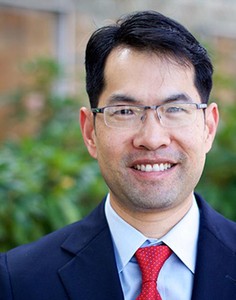 Portrait: Fred Hutchinson Cancer Center
As postdoc with Ruggero (who has his own medailonek), 2010 Cancer Cell paper (HSI2010) showed 4E-BP1–eIF4E, not S6 phosphorylation, mediates oncogenic mTOR signaling. His own 2012 Nature paper (HSI2012) used ribosome profiling to show mTOR selectively translates pro-invasion mRNAs in prostate cancer; INK128 reversed the signature.
Now at Fred Hutch, studying translation-driven lineage plasticity in prostate cancer (2026 JCI paper).
Milestones in the Atlas
| Year | Evidence | Study |
|---|---|---|
| 2010 | M | Genetic dissection of the oncogenic mTOR pathway reveals druggable addiction to translational control via 4EBP-eIF4E HSI2010 4EBP–eIF4E axis, not S6 phosphorylation, mediates oncogenic mTOR signaling; druggable with PP242. |
| 2012 | M | The translational landscape of mTOR signalling steers cancer initiation and metastasis HSI2012 Ribosome profiling shows oncogenic mTOR selectively translates pro-invasion mRNAs driving prostate cancer metastasis. |