Lloyd B. Klickstein
A physician-scientist who led the clinical studies at Novartis showing that low-dose mTOR inhibitors can boost immune function and cut infections in older adults.
Head of Translational Medicine, New Indications Discovery Unit, Novartis Institutes for BioMedical Research · MD, PhD
New Indications Discovery Unit, Novartis Institutes for BioMedical Research (Cambridge, Massachusetts, USA) ↗ ORCID0000-0002-4108-9123 ↗
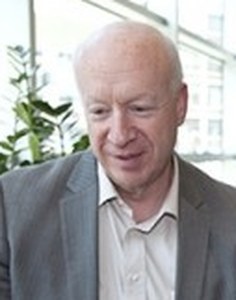 Portrait: Springer Lab, Harvard Medical School
Lloyd Klickstein is a physician-scientist with MD and PhD degrees. According to a profile page, he is Head of Translational Medicine in the New Indications Discovery Unit at the Novartis Institutes for BioMedical Research. In 2018 he was the senior author of a clinical trial that asked whether blocking mTOR in a gentle way could help the aging immune system.
In that phase 2a trial, 264 older adults took a low dose of two mTOR inhibitors, BEZ235 and everolimus (RAD001), for 6 weeks. During the following year they reported fewer infections, their cells switched on more antiviral genes, and they responded better to a flu vaccine. The result made low-dose mTOR inhibition a serious idea for treating aging-related decline in immunity.
A later phase 3 trial of RTB101 (BEZ235) alone did not confirm a clinical benefit, so the 2018 result is best read as an encouraging first step that was not borne out in larger testing.
Milestones in the Atlas
A selection, not a full bibliography: only papers that meet the Atlas inclusion criteria.
| Year | Evidence | Study |
|---|---|---|
| 2014 | H | mTOR inhibition improves immune function in the elderly MAN2014 Older volunteers took the rapalog everolimus (RAD001) before a flu shot, and their antibody response to the vaccine rose by about 20% at doses that were fairly well tolerated. The share of T cells carrying the exhaustion marker PD-1 also fell. The PEARL authors summarise the doses as 0.5 mg daily or 5 mg weekly for 6 weeks. This is the human result behind the weekly low-dose idea. Boundary: a stronger vaccine response is a lab marker, not fewer infections, and the later RTB101 trial (MAN2021) shows how that gap can matter. |
| 2018 | H | TORC1 inhibition enhances immune function and reduces infections in the elderly MAN2018 Senior author of a phase 2a randomized trial (264 older adults) in which 6 weeks of low-dose BEZ235 plus everolimus was linked to fewer infections over the next year and a better flu-vaccine response. |
Co-authors in the Atlas 3
People with a profile here who share at least one study with Lloyd B. Klickstein.
ShowHide
- David J. Glass 2 shared studies Muscle biologist and Regeneron vice president for ageing research, member of the US National Academy of Sciences, who helped discover the muscle-wasting enzymes MuRF1 and MAFbx and co-authored the first trials of low-dose mTOR inhibition in older people
- Joan B. Mannick 2 shared studies Ran early clinical trials of low-dose mTOR inhibitors in older adults, which improved their response to flu vaccination and, in a phase 2a trial, their rate of self-reported infections; a larger phase 3 trial of RTB101 (2021) did not confirm a reduction in respiratory illness. She led this work first at Novartis and then at resTORbio
- Dean Quinn Clinical trial investigator at P3 Research in Wellington, New Zealand, who was a co-author of the resTORbio trials that tested low-dose mTOR inhibitors to strengthen immunity in older adults
Every researcher with a profile →
Thank you. That helps us know which pages have been read by someone who knows the work.
Thank you. We will check it and correct the page.
Thank you. Your answer was counted anonymously.