Jayanta Debnath
Physician-scientist who studies how autophagy - the cell's self-digestion system - keeps epithelial tissue healthy and how tumours hijack it
Distinguished Professor & Chair, Department of Pathology, UC San Francisco (chair since 2018) · Professor, UCSF (2016) · Associate Professor, UCSF (2011) · Assistant Professor, UCSF (2005) · Internship, residency and fellowship in pathology, Brigham and Women's Hospital (1998–2003) · MD, Harvard Medical School (1998) · BS in Chemistry, Georgia Institute of Technology (1992) · Member, American Society for Clinical Investigation (2013) and American Association of Physicians (2023)
Debnath Lab, UC San Francisco (San Francisco, California, USA) ↗ ORCID0000-0002-8745-4069 ↗
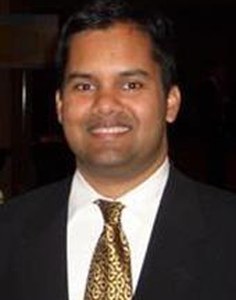 Portrait: UCSF
In the 2010 Alzheimer's study Debnath is the outside expert brought in for one specific job: reading the autophagy data. The San Antonio team had fed rapamycin to PDAPP mice, a model of Alzheimer's disease, and found that the mice kept their memories and accumulated less of the toxic amyloid-beta 42 peptide. The crucial question was whether autophagy was the reason, and the paper's author contributions credit Debnath with the interpretation of those autophagy measurements and, with Matthew Hart, the critical review of the manuscript.
His own laboratory at UCSF works on the same process in a different setting. Autophagy is the system by which a cell wraps up worn-out proteins and organelles in a double membrane and delivers them to the lysosome to be broken down and recycled. Debnath's group asks what that recycling does for epithelial cells - the sheets of cells that line our organs - and how cancer cells exploit it to survive detachment, starvation and chemotherapy, with a long-running focus on breast cancer and metastasis.
He trained as a physician first, taking an MD at Harvard and pathology training at Brigham and Women's Hospital, and did his cell biology in Joan Brugge's laboratory, where he helped develop three-dimensional cultures of mammary cells that behave like real tissue. He has led the UCSF Department of Pathology since 2018 while keeping the lab running.
Milestones in the Atlas
| Year | Evidence | Study |
|---|---|---|
| 2010 | A | Inhibition of mTOR by rapamycin abolishes cognitive deficits and reduces amyloid-beta levels in a mouse model of Alzheimer's disease SPI2010 Interpreted the autophagy data that linked rapamycin's memory and amyloid benefits to increased self-digestion in neurons, and co-reviewed the manuscript. |
Co-authors in the Atlas
People with a profile here who share at least one study with Jayanta Debnath.
- Arlan Richardson Studies how rapamycin slows ageing in mice, including the broad changes it causes in the liver, and co-authored early studies showing that rapamycin protects memory in Alzheimer's-model mice
- Natalia Podlutskaya Contributed, at the Barshop Institute in San Antonio, to mouse studies showing that rapamycin prevents Alzheimer's-like memory loss and improves cognition in normal ageing
- Randy Strong Leads the San Antonio site of the NIA Interventions Testing Program, which tests each compound in parallel at three sites under one shared protocol. He first-authored the program's reports on resveratrol and other supplements (2012) and on rapamycin combined with acarbose (2022)
- Veronica Galvan Led mouse studies showing that rapamycin prevents Alzheimer's-like memory loss and amyloid build-up, and improves learning in normally ageing mice
Every researcher with a profile →
On the programme
Meetings in the Atlas calendar where Jayanta Debnath is listed among the speakers or organisers.
- past Keystone: Autophagy – Mechanisms to Therapy 2026 ↗ 2–5 Feb 2026 · Keystone, Colorado, USA · ★★