James L. Kirkland
Founder of the field of senolytics, drugs that clear senescent cells, and a leader of clinical trials of ageing-targeted therapies
Director, Center for Advanced Gerotherapeutics, Cedars-Sinai · Principal Investigator, Translational Geroscience Network · formerly Mayo Clinic
Center for Advanced Gerotherapeutics, Cedars-Sinai Medical Center (Los Angeles, California, USA) ↗
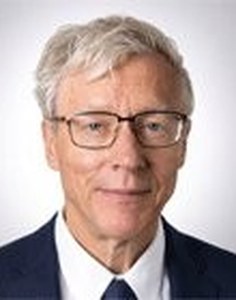 Portrait: Elsevier Conferences
James Kirkland is a physician-scientist whose main focus is how senescent cells, which stop dividing but stay alive and release inflammatory signals, contribute to age-related disease. He is described as a founder of senolytics, the idea of using drugs to remove such cells.
LAN2026 is a Mayo Clinic Proceedings study of low-dose rapamycin in frail older adults with heart failure with preserved ejection fraction (HFpEF), a common heart condition of older age. Kirkland is one of the listed authors, alongside other researchers working on ageing biology and mTOR, including Dudley Lamming. In the Atlas this study sits at the point where mTOR inhibition is tested directly in older patients.
Kirkland spent many years at Mayo Clinic and, according to a 2025 Cedars-Sinai article, now directs the new Cedars-Sinai Center for Advanced Gerotherapeutics and leads the Translational Geroscience Network, which runs many clinical trials.
Milestones in the Atlas
A selection, not a full bibliography: only papers that meet the Atlas inclusion criteria.
| Year | Evidence | Study |
|---|---|---|
| 2012 | A | Evaluation of resveratrol, green tea extract, curcumin, oxaloacetic acid, and medium-chain triglyceride oil on life span of genetically heterogeneous mice STR2012 None of five popular longevity compounds had a statistically significant effect on lifespan. The paper explicitly states the ITP's mission is to publish all results, positive or negative - the exact registry model this Atlas should emulate. |
| 2026 | H | Rapamycin in Frail Older Subjects with Heart Failure with Preserved Ejection Fraction LAN2026 Listed author of a Mayo Clinic Proceedings study of low-dose rapamycin in frail older adults with heart failure with preserved ejection fraction; Kirkland's role as an ageing-biology and senescence researcher on the team. |
Co-authors in the Atlas 9
People with a profile here who share at least one study with James L. Kirkland.
ShowHide
- Clinton Astle Long-time research associate of David Harrison at The Jackson Laboratory, with work on mouse blood stem cells and aging since the 1970s, and a co-author of the Interventions Testing Program papers that showed rapamycin extends mouse lifespan
- Conor M. Lane Cardiologist at Mayo Clinic in Rochester, working in interventional cardiology, and first author of a trial of low-dose rapamycin in frail older adults with heart failure with preserved ejection fraction
- David A. Sinclair Geneticist of aging at Harvard Medical School, known for work on sirtuins, NAD+ and the idea that aging stems from a loss of epigenetic information, who appears in this Atlas as a co-author on two mouse lifespan studies
- David E. Harrison Led the Jackson Laboratory site of the NIA Interventions Testing Program. His 2009 Nature paper showed that rapamycin extends the lifespan of genetically diverse mice even when feeding starts at 20 months of age, which the authors described as the first pharmacological extension of lifespan in both sexes of a mammal
- Dudley W. Lamming Showed as a postdoc that rapamycin's harm to glucose metabolism comes largely from its effect on mTORC2, while the lifespan benefit tracks mTORC1. His Wisconsin lab studies intermittent rapamycin dosing and how restricting dietary protein or single amino acids affects metabolism and ageing
- Mandeep Singh Interventional cardiologist and professor of medicine at Mayo Clinic; corresponding author on a 2026 trial of low-dose rapamycin in frail older adults with heart failure with preserved ejection fraction (HFpEF)
- Nancy L. Nadon Scientist and programme official at the US National Institute on Aging who oversaw research resources for aging biology and helped run the Interventions Testing Program that found rapamycin extends mouse lifespan
- Randy Strong Leads the San Antonio site of the NIA Interventions Testing Program, which tests each compound in parallel at three sites under one shared protocol. He first-authored the program's reports on resveratrol and other supplements (2012) and on rapamycin combined with acarbose (2022)
- Richard A. Miller Leads the University of Michigan site of the NIA Interventions Testing Program. His papers showed that rapamycin extends mouse lifespan when started in middle age, and that the size of the benefit depends on dose and differs between males and females
Every researcher with a profile →
Thank you. That helps us know which pages have been read by someone who knows the work.
Thank you. We will check it and correct the page.
Thank you. Your answer was counted anonymously.