Hiroyuki Kubota
Systems biologist who showed that the insulin pathway carries different messages in the timing of its signal, and that S6K, the mTORC1 target, reads only the fast part
Professor, Division of Integrated Omics, Research Center for Transomics Medicine, Medical Institute of Bioregulation, Kyushu University · PhD in Science, University of Tokyo
Division of Integrated Omics, Kyushu University (Fukuoka, Japan) ↗
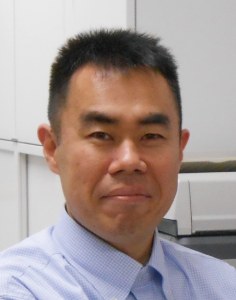 Portrait: Medical Institute of Bioregulation, Kyushu University
Hiroyuki Kubota earned his doctorate at the University of Tokyo in 2001 and spent the following years there, from 2009 as an assistant professor in Shinya Kuroda's systems biology group. In 2014 he became a professor at Kyushu University's Medical Institute of Bioregulation, where his lab combines measurements of many molecular layers at once (proteins, their phosphorylation, metabolites) with mathematical models.
His two studies in the Atlas ask one question at two scales: can a cell tell a short burst of insulin from a steady level? In rat liver cells (KUB2012) and then in living rats (KUB2018), the answer was yes. The same pathway passes on both patterns, and each downstream molecule picks the part it responds to. S6K, which sits directly under mTORC1, followed the quick pulse. G6Pase, a glucose-making enzyme, followed the steady baseline. That makes the timing of a signal, not only its size, part of the message.
Milestones in the Atlas
| Year | Evidence | Study |
|---|---|---|
| 2012 | M | Temporal coding of insulin action through multiplexing of the AKT pathway KUB2012 First author. In liver cells, a short insulin pulse and a steady insulin dose were passed through AKT as two different time patterns, and S6K responded only to the fast one. |
| 2018 | A | In Vivo Decoding Mechanisms of the Temporal Patterns of Blood Insulin by the Insulin-AKT Pathway in the Liver KUB2018 First author. The in-vivo follow-up in rat liver: the insulin receptor carries every insulin pattern, and downstream molecules pick out different parts of it, with S6K reading the pulse-like extra secretion. |
Co-authors in the Atlas
People with a profile here who share at least one study with Hiroyuki Kubota.
- Shinya Kuroda 2 shared studies Leads a systems biology lab that studies how cells decode the timing of hormone signals, with insulin and mTORC1-S6K as the main test case