Grace Y. Liu
Wrote with David Sabatini a major 2020 review of mTOR in nutrition, growth and ageing, and in the Sabatini lab studied how mTORC1 senses nutrients such as serine
Postdoc, Vance Lab, UC Berkeley (since 2023) · PhD, MIT Department of Biology (research in the Sabatini lab, thesis supervisor of record Iain Cheeseman; defended 2022) · NIH F31 fellow, mTORC1 serine sensor
Vance Lab, University of California, Berkeley (Berkeley, California, USA) ↗ Lab lineagetrained under Russell E. Vance → ORCID0000-0001-5463-3055 ↗
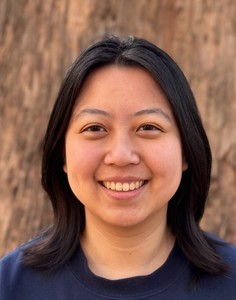 Portrait: Vance Lab, UC Berkeley
Fifth author on GU2017 (SAMTOR discovery). Her own NIH-funded PhD project tackled how mTORC1 senses serine; she was also first author of a 2024 Nature Communications paper (with Perrimon lab, Harvard) showing flies evolved an extra sensor (Unmet) for methionine.
In 2020, alongside labwork, co-authored 'mTOR at the nexus of nutrition, growth, ageing and disease' (LIU2020) directly with David Sabatini.
After her PhD (Nov 2022), moved to Russell Vance's lab at UC Berkeley, studying effector-triggered immunity.
Milestones in the Atlas
A selection, not a full bibliography: only papers that meet the Atlas inclusion criteria.
| Year | Evidence | Study |
|---|---|---|
| 2017 | M | SAMTOR is an S-adenosylmethionine sensor for the mTORC1 pathway GU2017 Contributed to establishing SAMTOR as the S-adenosylmethionine sensor linking methionine metabolism to mTORC1. |
| 2020 | R | mTOR at the nexus of nutrition, growth, ageing and disease LIU2020 Co-authored, with David Sabatini, a widely cited review of the mTOR field. |
Co-authors in the Atlas 8
People with a profile here who share at least one study with Grace Y. Liu.
ShowHide
- David M. Sabatini 2 shared studies Identified mTOR (as RAFT1) in 1994. His lab then mapped much of the machinery around it: raptor and rictor at the core of mTORC1 and mTORC2, the Rag–Ragulator system that docks mTORC1 on the lysosome, and the sensors that detect leucine, arginine and SAM
- J. Wade Harper Co-discovered the F-box motif that links substrates to SCF ubiquitin ligases, and co-leads with Steven Gygi the BioPlex protein-interaction map, which contributed to the discoveries of the CASTOR and SAMTOR nutrient sensors
- Jose M. Orozco Researcher trained in David Sabatini's laboratory at the Whitehead Institute and MIT who showed that mTORC1 senses glucose through the glycolysis metabolite DHAP
- Kendall J. Condon Ran genome-wide CRISPR screens revealing how mitochondrial stress signals to mTORC1
- Robert A. Saxton Solved, as a Sabatini-lab graduate student, the structures of the leucine sensor Sestrin2 and the arginine sensor CASTOR1, showing how each one grips its amino acid. He also co-wrote a widely cited 2017 review of mTOR signalling with David Sabatini
- Sonia M. Scaria Contributed, as an MIT undergraduate in the Sabatini lab, to the discovery of CASTOR1 as the arginine sensor and SAMTOR as the SAM sensor of the mTORC1 pathway
- Steven P. Gygi Mass-spectrometry scientist whose Harvard lab builds large-scale proteomics methods, including the BioPlex human protein-interaction map, and contributed proteomics to the discoveries of the CASTOR and SAMTOR nutrient sensors
- Xin Gu Cell biologist who discovered SAMTOR, the sensor that lets mTORC1 read the methyl donor SAM, as a PhD student at MIT, and who now leads a lab at Dana-Farber and Harvard Medical School studying ubiquitin-independent protein destruction by the midnolin-proteasome pathway
Every researcher with a profile →
Thank you. That helps us know which pages have been read by someone who knows the work.
Thank you. We will check it and correct the page.
Thank you. Your answer was counted anonymously.