Gerald R. Crabtree
Helped define the calcineurin-NFAT pathway behind cyclosporine and FK506, and showed in 1992 that rapamycin blocks IL-2 activation of p70 S6 kinase.
David Korn Professor, Pathology and Developmental Biology, Stanford University · Howard Hughes Medical Institute Investigator (since 1988) · Born 1946, West Virginia, USA
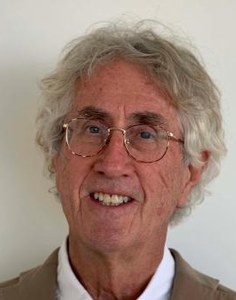 Portrait: Stanford University School of Medicine
Gerald Crabtree is a physician-scientist at Stanford who has spent his career on how signals reach the genes in the cell nucleus. In the late 1980s and early 1990s, with Stuart Schreiber, his work helped explain the calcineurin-NFAT pathway, which is how the drugs cyclosporine and FK506 switch off immune responses.
The 1992 paper in this Atlas, led by Calvin Kuo with Crabtree as senior author, asked how rapamycin stops T cells from dividing. The team found that the immune signal interleukin-2 switches on an enzyme called p70 S6 kinase, and that very low rapamycin doses blocked it at the same concentrations that stop T cells entering S phase. FK506 competed with rapamycin, showing that both drugs act through the FKBP protein. This tied rapamycin to a growth-signalling pathway that later became known as the mTOR pathway.
Crabtree's later work focuses on chromatin regulation in development and cancer, including a remodeling complex whose subunits are mutated in many human cancers. He is also a founder of several biotechnology companies.
Milestones in the Atlas
A selection, not a full bibliography: only papers that meet the Atlas inclusion criteria.
| Year | Evidence | Study |
|---|---|---|
| 1992 | M | Rapamycin-FKBP specifically blocks growth-dependent activation of and signaling by the 70 kd S6 protein kinases CHU1992 Co-author: rapamycin-FKBP12 blocks growth-factor activation of p70 S6 kinase (T cells, in vitro). |
| 1992 | M | Rapamycin selectively inhibits interleukin-2 activation of p70 S6 kinase KUO1992 Senior author of the study showing that rapamycin selectively and rapidly blocks IL-2-driven phosphorylation and activation of p70 S6 kinase at doses that stop T-cell entry into S phase. |
Co-authors in the Atlas 1
People with a profile here who share at least one study with Gerald R. Crabtree.
ShowHide
- John Blenis 2 shared studies Showed early on that rapamycin blocks S6 kinase, then worked out how mTORC1 drives cell growth through its two main translation targets, S6K1 and 4E-BP1. His lab also found, in parallel with the Sabatini lab, that mTORC1 phosphorylates Grb10, a feedback brake on insulin signalling
Every researcher with a profile →
Thank you. That helps us know which pages have been read by someone who knows the work.
Thank you. We will check it and correct the page.
Thank you. Your answer was counted anonymously.