Daniel K. Nomura
Chemical biologist and professor at UC Berkeley who uses chemoproteomics to find druggable sites on proteins, including covalent handles that turn ordinary drug molecules into protein degraders
Professor of Chemical Biology and Molecular Therapeutics, Departments of Chemistry and of Molecular and Cell Biology, UC Berkeley (assistant professor 2011, associate 2015, professor since 2019) · Director, Novartis-Berkeley Translational Chemical Biology Institute (since 2017) · Investigator, Innovative Genomics Institute · Postdoc with Benjamin Cravatt, Scripps Research (to 2011) · PhD, UC Berkeley (2008)
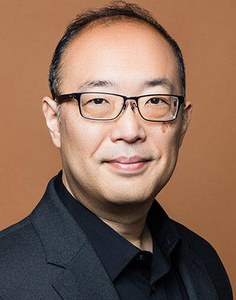 Portrait: UC Berkeley College of Chemistry
Daniel Nomura is a co-author of two papers from Roberto Zoncu's lab in this Atlas about cholesterol as a signal for growth. mTORC1, the growth-control complex, is switched on at the surface of the lysosome, the cell's recycling compartment, when nutrients are present. CAS2017 showed that cholesterol inside the lysosome is one of these nutrient signals: the protein SLC38A9 is needed for cholesterol to switch mTORC1 on, and NPC1, which moves cholesterol out of the lysosome and is faulty in Niemann-Pick type C disease, holds the signal back. The experiments used cell lines and patient fibroblasts. SHI2022 found the cholesterol sensor itself, LYCHOS (previously known as GPR155): when cholesterol is high, LYCHOS captures GATOR1, a complex that keeps mTORC1 off, and so lets mTORC1 reach the lysosome. This was shown in human cell lines and with purified proteins.
Nomura's own lab works at the border of chemistry and biology. It uses chemoproteomics, methods that use reactive chemical probes and mass spectrometry to map where small molecules can attach to proteins across the whole cell. A 2019 Nature Chemical Biology paper from the lab, with Zoncu lab member Hijai Shin as second author, showed that a compound attaching covalently to the vacuolar H+-ATPase, the proton pump that acidifies lysosomes, switches on autophagy by inhibiting mTORC1. More recently the lab has designed small chemical 'handles' that bind the E3 ligase RNF126 and, when attached to a drug, make the cell destroy the drug's target protein. In 2026 it used an improved handle to degrade BRD4 and the androgen receptor variant AR-V7, which drives drug-resistant prostate cancer.
Nomura studied molecular and cell biology at UC Berkeley (BA 2003) and earned a PhD in molecular toxicology there in 2008 with John Casida. Postdoctoral work in chemical biology followed at the Scripps Research Institute with Benjamin Cravatt, who developed many of the chemoproteomic methods the lab now uses. Nomura joined the Berkeley faculty in 2011 and became a full professor in 2019. Today Nomura is Professor of Chemical Biology and Molecular Therapeutics in the Departments of Chemistry and of Molecular and Cell Biology, directs the Novartis-Berkeley Translational Chemical Biology Institute (since 2017) and is an investigator of the Innovative Genomics Institute. Nomura has also co-founded drug discovery companies, including Frontier Medicines.
Milestones in the Atlas
A selection, not a full bibliography: only papers that meet the Atlas inclusion criteria.
| Year | Evidence | Study |
|---|---|---|
| 2017 | M | Lysosomal cholesterol activates mTORC1 via an SLC38A9-Niemann-Pick C1 signaling complex CAS2017 Co-author of the study showing that lysosomal cholesterol activates mTORC1 through SLC38A9 and NPC1. |
| 2022 | M | Lysosomal GPCR-like protein LYCHOS signals cholesterol sufficiency to mTORC1 SHI2022 Co-author of the study identifying LYCHOS as the lysosomal cholesterol sensor for mTORC1. |
Co-authors in the Atlas 8
People with a profile here who share at least one study with Daniel K. Nomura.
ShowHide
- Douglas F. Covey 2 shared studies Medicinal chemist and Andrew C and Barbara B Taylor Distinguished Professor of Psychiatry at Washington University in St. Louis who designs synthetic steroids and sterols to study neurosteroids, GABA-A receptors and cholesterol sensing, including in two Atlas studies on cholesterol and mTORC1
- Oliver B. Davis 2 shared studies Cell biologist who did a PhD in Roberto Zoncu's lab at UC Berkeley on how lysosomal cholesterol controls mTORC1, and first author of a 2020 study proposing NPC1-mTORC1 signalling as a drug target in Niemann-Pick type C disease
- Rushika M. Perera 2 shared studies Professor of Anatomy at UCSF whose lab studies how autophagy and the lysosome, the cell's recycling centre, help cancer cells cope with stress, and a co-author of two Science papers on how lysosomal cholesterol switches on mTORC1
- Ashley M. Thelen Cell biologist who did graduate work in Roberto Zoncu's lysosome lab at UC Berkeley, first author of a 2017 review on the lysosome's roles in lipid metabolism, and later a postdoctoral scholar in Philip Greenberg's lab at Fred Hutch
- Brian M. Castellano Cell biologist who, in Roberto Zoncu's lab at UC Berkeley, showed that cholesterol inside the lysosome switches on mTORC1 through the SLC38A9 and NPC1 proteins
- Hijai R. Shin Cell biologist who discovered, in Roberto Zoncu's lab at UC Berkeley, that the lysosomal protein LYCHOS senses cholesterol for mTORC1, and who now works at the Children's Medical Center Research Institute at UT Southwestern
- Chun-Yan Lim Cell biologist who trained in Roberto Zoncu's lab at UC Berkeley on how cholesterol controls mTORC1, and now publishes as corresponding author from Guangzhou National Laboratory on lysosome signalling in immunity and nutrient sensing
- Ofer Moldavski Researcher who worked on lysosomes and lipid signalling in Roberto Zoncu's lab at UC Berkeley and was first author of a 2021 study on how the oxysterol 4beta-hydroxycholesterol switches on fat-making genes
Every researcher with a profile →
Thank you. That helps us know which pages have been read by someone who knows the work.
Thank you. We will check it and correct the page.
Thank you. Your answer was counted anonymously.