Carmine Settembre
Discovered how mTORC1 phosphorylates TFEB on the lysosome to silence the cell's recycling program
PhD, University of Naples Federico II (2008, with Ballabio) · postdoc, Columbia University & Baylor College of Medicine · PI, TIGEM (since 2013) · Full Professor of Histology, Univ. of Naples Federico II
Settembre Lab, TIGEM (Telethon Institute of Genetics and Medicine), Naples ↗
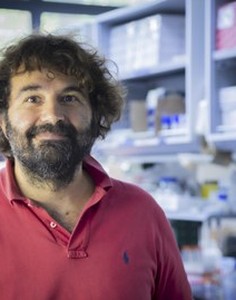 Portrait: TIGEM (Telethon Institute of Genetics and Medicine)
As first author in Ballabio's lab (SET2011), showed TFEB is the master switch turning on both autophagosome- and lysosome-building genes together. A year later (SET2012), pinned down the sensor: mTORC1 phosphorylates TFEB directly on the lysosome, trapping it in the cytoplasm when nutrients are abundant.
Since 2013 at TIGEM, extended the mechanism into disease: hyperactive mTORC1 in lysosomal storage disorders stunts bone growth via autophagy suppression in cartilage; more recently linked synaptic activity to TFEB-mediated tau clearance in neurodegeneration models.
Milestones in the Atlas
| Year | Evidence | Study |
|---|---|---|
| 2011 | M | TFEB links autophagy to lysosomal biogenesis SET2011 First-authored the paper establishing TFEB as master switch for autophagy+lysosome genes. |
| 2012 | M | A lysosome-to-nucleus signalling mechanism senses and regulates the lysosome via mTOR and TFEB SET2012 mTORC1 sits on the lysosome and phosphorylates TFEB there. |