Bryan A. Ballif
Mass-spectrometry and phosphorylation specialist who mapped key phosphorylation sites in two founding mTOR signaling papers from the Blenis lab
Steven Gygi lab, Department of Cell Biology, Harvard Medical School (papers 2004–2005) · later Professor of Biology, University of Vermont
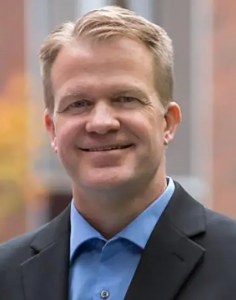 Portrait: University of Vermont
Bryan A. Ballif is second author on two Atlas studies from John Blenis's laboratory, both done together with Steven Gygi's mass-spectrometry group at Harvard Medical School. Mass spectrometry lets researchers find exactly which amino acids in a protein carry a phosphate group, which is how kinases such as mTOR and S6K pass on signals.
In ROU2004 the team showed that the kinase RSK, switched on by Ras and growth signals, phosphorylates the tumour suppressor TSC2 at Ser-1798 and so takes the brake off mTORC1. In HOL2005 they showed that mTOR and S6K1 assemble the protein-synthesis machinery on eIF3 in a set order of binding and phosphorylation steps. Both are cell-culture studies.
Milestones in the Atlas
A selection, not a full bibliography: only papers that meet the Atlas inclusion criteria.
| Year | Evidence | Study |
|---|---|---|
| 2004 | M | Tumor-promoting phorbol esters and activated Ras inactivate the tuberous sclerosis tumor suppressor complex via p90 ribosomal S6 kinase. ROU2004 Co-author: RSK phosphorylates TSC2 at Ser-1798, linking Ras/MAPK signals to mTORC1 (cells). |
| 2005 | M | mTOR and S6K1 mediate assembly of the translation preinitiation complex through dynamic protein interchange and ordered phosphorylation events HOL2005 Co-author: mTOR and S6K1 drive ordered assembly of the translation preinitiation complex on eIF3 (cells). |
Co-authors in the Atlas 4
People with a profile here who share at least one study with Bryan A. Ballif.
ShowHide
- John Blenis 2 shared studies Showed early on that rapamycin blocks S6 kinase, then worked out how mTORC1 drives cell growth through its two main translation targets, S6K1 and 4E-BP1. His lab also found, in parallel with the Sabatini lab, that mTORC1 phosphorylates Grb10, a feedback brake on insulin signalling
- Steven P. Gygi 2 shared studies Mass-spectrometry scientist whose Harvard lab builds large-scale proteomics methods, including the BioPlex human protein-interaction map, and contributed proteomics to the discoveries of the CASTOR and SAMTOR nutrient sensors
- Marina K. Holz Cell biologist who, as a postdoc with John Blenis, showed how mTOR and S6K1 trade places on eIF3 to start protein synthesis, and who now studies mTOR in breast cancer and the rare lung disease LAM at New York Medical College
- Philippe P Roux Found the RSK arm of the MAPK input to the TSC complex as a postdoc with John Blenis, and now runs a lab on Ras/MAPK and mTOR signalling in cancer
Thank you. That helps us know which pages have been read by someone who knows the work.
Thank you. We will check it and correct the page.
Thank you. Your answer was counted anonymously.