Philippe P Roux
Found the RSK arm of the MAPK input to the TSC complex as a postdoc with John Blenis, and now runs a lab on Ras/MAPK and mTOR signalling in cancer
Professor, Department of Pathology and Cell Biology, Universite de Montreal; principal investigator at IRIC · postdoctoral work in the Blenis lab, Harvard Medical School
Roux Lab, Institute for Research in Immunology and Cancer (IRIC), Universite de Montreal (Montreal, Quebec, Canada) ↗ Lab lineagetrained under John Blenis →
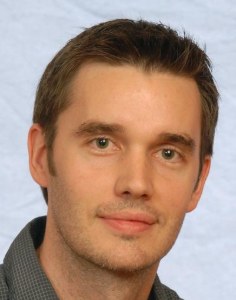 Portrait: Institute for Research in Immunology and Cancer (IRIC), Université de Montréal
Philippe P. Roux did the work held in this Atlas as a postdoctoral fellow in John Blenis's laboratory at Harvard Medical School. With phorbol esters and activated Ras forms that poorly activate PI3K, he showed that tuberin (TSC2) is still phosphorylated without Akt, and that the MAPK-activated kinase RSK1 binds tuberin and phosphorylates it at Ser-1798, at the conserved C terminus of the protein, which weakens the tuberin/hamartin brake and increases mTOR signalling to S6K1 (ROU2004).
He is now a professor in the Department of Pathology and Cell Biology at the Universite de Montreal and a principal investigator at the Institute for Research in Immunology and Cancer, where his laboratory works on the Ras/MAPK and mTOR pathways, RSK substrates and the control of mRNA translation in cancer.
Milestones in the Atlas
A selection, not a full bibliography: only papers that meet the Atlas inclusion criteria.
| Year | Evidence | Study |
|---|---|---|
| 2004 | M | Tumor-promoting phorbol esters and activated Ras inactivate the tuberous sclerosis tumor suppressor complex via p90 ribosomal S6 kinase. ROU2004 First author: RSK1 phosphorylates tuberin at Ser-1798, the second kinase arm by which Ras/MAPK signalling disables the TSC brake. |
Co-authors in the Atlas 3
People with a profile here who share at least one study with Philippe P Roux.
ShowHide
- Bryan A. Ballif Mass-spectrometry and phosphorylation specialist who mapped key phosphorylation sites in two founding mTOR signaling papers from the Blenis lab
- John Blenis Showed early on that rapamycin blocks S6 kinase, then worked out how mTORC1 drives cell growth through its two main translation targets, S6K1 and 4E-BP1. His lab also found, in parallel with the Sabatini lab, that mTORC1 phosphorylates Grb10, a feedback brake on insulin signalling
- Steven P. Gygi Mass-spectrometry scientist whose Harvard lab builds large-scale proteomics methods, including the BioPlex human protein-interaction map, and contributed proteomics to the discoveries of the CASTOR and SAMTOR nutrient sensors
Thank you. That helps us know which pages have been read by someone who knows the work.
Thank you. We will check it and correct the page.
Thank you. Your answer was counted anonymously.