Anne-Claude Gingras
Showed in 1999 that mTOR phosphorylates 4E-BP1 in a priming two-step mechanism, and now leads work on interaction proteomics (including BioID) that maps how cells read signals such as mTORC1
Senior Investigator & Director, Lunenfeld-Tanenbaum Research Institute · Vice President, Research, Sinai Health · Professor, University of Toronto
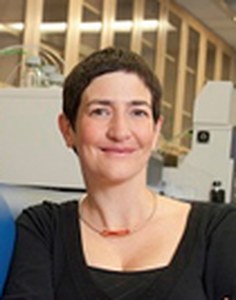 Portrait: Lunenfeld-Tanenbaum Research Institute, Sinai Health
Anne-Claude Gingras did the work in GIN1999 at McGill University in Nahum Sonenberg's field, which studies how cells start making proteins. The protein 4E-BP1 holds back the factor eIF4E; when 4E-BP1 is phosphorylated it lets go, and protein synthesis speeds up. The paper asked which sites mTOR itself phosphorylates and in what order.
The answer was a two-step mechanism. mTOR first adds phosphate to two sites, Thr-37 and Thr-46, and this acts as a priming event that is needed before the later, serum-sensitive sites can be phosphorylated. It was an early, concrete picture of how mTOR turns a growth signal into more translation.
Today she is Senior Investigator and Director of the Lunenfeld-Tanenbaum Research Institute in Toronto and Vice President, Research, at Sinai Health. Her laboratory develops mass spectrometry and proximity-labelling methods to map protein interactions and locations, and studies signalling pathways including mTORC1, relevant to cancer, neurodegeneration and rare diseases. She holds a Canada Research Chair in Functional Proteomics.
Milestones in the Atlas
A selection, not a full bibliography: only papers that meet the Atlas inclusion criteria.
| Year | Evidence | Study |
|---|---|---|
| 1999 | M | Regulation of 4E-BP1 phosphorylation: a novel two-step mechanism GIN1999 First author: mTOR phosphorylates 4E-BP1 at Thr-37 and Thr-46 as a priming step required for later phosphorylation sites that release eIF4E. |
| 2002 | M | A rapamycin-sensitive signaling pathway contributes to long-term synaptic plasticity in the hippocampus TAN2002 Co-author: mTOR, 4E-BP1, 4E-BP2 and eIF4E sit in hippocampal dendrites near synapses, and rapamycin reduced late-phase LTP in rodent hippocampal slices. |
Co-authors in the Atlas
People with a profile here who share at least one study with Anne-Claude Gingras.
- Nahum Sonenberg 2 shared studies Co-discovered the mRNA cap-binding protein eIF4E and the 4E-BP proteins that restrain it, and showed how mTOR releases this brake to control protein synthesis
- Erin M. Schuman Studies how neurons make and break down proteins locally in dendrites and axons; her group helped tie a rapamycin-sensitive mTOR pathway to the protein-synthesis-dependent phase of synaptic plasticity.
- Robert T. Abraham Co-discovered the mammalian target of rapamycin in 1995, giving it the name mTOR, and showed that it directly phosphorylates the translation repressor 4E-BP1 (PHAS-I)
- Shao-Jun Tang Neuroscientist who, as a postdoc in Erin Schuman's group at Caltech, helped show that a rapamycin-sensitive mTOR pathway is needed for the protein-synthesis-dependent late phase of hippocampal LTP; his lab now studies chronic pain.
- Steven P. Gygi Mass-spectrometry scientist whose Harvard lab builds large-scale proteomics methods, including the BioPlex human protein-interaction map, and contributed proteomics to the discoveries of the CASTOR and SAMTOR nutrient sensors
Every researcher with a profile →
Thank you. Your answer was counted anonymously.
Thank you. That helps us know which pages have been read by someone who knows the work.
Thank you. We will check it and correct the page.