Toren Finkel
Studies the biology of aging, including how mTOR levels and mitochondria influence lifespan and healthspan in mammals.
Director, Aging Institute, UPMC & University of Pittsburgh (since 2017) · Chief, Center for Molecular Medicine, NHLBI, NIH (nearly 25 years at NIH) · MD, PhD, Harvard
Aging Institute, UPMC and University of Pittsburgh (Pittsburgh, Pennsylvania, USA) ↗
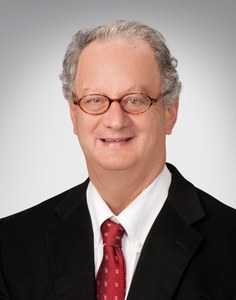 Portrait: UPMC
Toren Finkel directs the Aging Institute at UPMC and the University of Pittsburgh, which he joined in 2017. Before that he spent nearly 25 years at the National Institutes of Health, most recently as chief of the Center for Molecular Medicine at the National Heart, Lung, and Blood Institute. He earned his MD and PhD at Harvard.
The Atlas study from 2013 asked a direct question: what happens if a mammal simply has less mTOR? The team built mice that make about 25 percent of normal mTOR, with lower mTORC1 and mTORC2 activity.
These mice were smaller but ate, handled glucose and burned energy normally. They lived about 20 percent longer at the median, and many tissue markers of aging were reduced. The slowing of aging was uneven, so some organs were protected more than others.
Milestones in the Atlas
A selection, not a full bibliography: only papers that meet the Atlas inclusion criteria.
| Year | Evidence | Study |
|---|---|---|
| 2006 | M | The mammalian target of rapamycin (mTOR) pathway regulates mitochondrial oxygen consumption and oxidative capacity SCH2006 Showed in human cells that the mTOR–raptor complex sets mitochondrial oxygen consumption and oxidative capacity, and that rapamycin lowers them; Finkel was senior author. |
| 2013 | A | Increased mammalian lifespan and a segmental and tissue-specific slowing of aging after genetic reduction of mTOR expression WUX2013 Showed that mice with about 25 percent of normal mTOR live roughly 20 percent longer with segmental, tissue-specific slowing of aging; Finkel was senior author. |
Co-authors in the Atlas
People with a profile here who share at least one study with Toren Finkel.
- Stefan M. Schieke Physician-scientist who, as a postdoc at the NHLBI, helped show that mTOR-raptor activity tracks mitochondrial oxygen consumption in human cells; his lab now studies the metabolism of lymphoid cancers.
Every researcher with a profile →
Thank you. Your answer was counted anonymously.
Thank you. That helps us know which pages have been read by someone who knows the work.
Thank you. We will check it and correct the page.