Simon Melov
Geroscientist who studies how cells and tissues change with age or drug treatment, including the finding that late-life rapamycin improves heart function in old mice.
Professor, Buck Institute for Research on Aging · Founding editor, Aging Cell
Melov Lab, Buck Institute for Research on Aging (Novato, California, USA) ↗
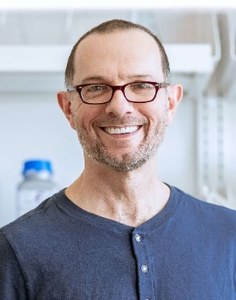 Portrait: Buck Institute for Research on Aging
Simon Melov leads a laboratory at the Buck Institute for Research on Aging. The group uses worms, mice, human cells and tissues together with large-scale genomic analysis to find the core mechanisms of ageing, and aims to develop treatments that reduce damage from ageing itself. He was also a founding editor of the journal Aging Cell.
In the 2013 study in this Atlas, he was the senior author. The team gave rapamycin to female mice that were already 24 months old, which is old for a mouse, for three months. Ultrasound tests of heart function showed that age-related changes in the heart were reversed or reduced. Gene-activity data pointed to lower inflammation and less heart-muscle enlargement as likely reasons.
The result matters because it suggests mTOR inhibition can help even when started late in life, not only slow ageing when started early. It was done in mice, not in people.
Milestones in the Atlas
A selection, not a full bibliography: only papers that meet the Atlas inclusion criteria.
| Year | Evidence | Study |
|---|---|---|
| 2013 | A | Late-life rapamycin treatment reverses age-related heart dysfunction FLY2013 Senior author. Three months of rapamycin in 24-month-old female mice reversed or reduced age-related heart changes, with gene-expression changes pointing to less hypertrophy and inflammation. |
Co-authors in the Atlas 4
People with a profile here who share at least one study with Simon Melov.
ShowHide
- Brian K. Kennedy Showed with Matt Kaeberlein that reducing TOR or Sch9 signalling extends yeast lifespan in the same way as dietary restriction, and has since championed mTOR as a target for slowing human ageing
- James M. Flynn Aging researcher from Simon Melov's lab at the Buck Institute who showed that a short course of rapamycin late in life can partly reverse heart aging in mice
- Pankaj Kapahi Showed that reducing TOR signalling extends fruit-fly lifespan, and that the translation repressor 4E-BP is needed for dietary restriction to extend it
- Randy Strong Leads the San Antonio site of the NIA Interventions Testing Program, which tests each compound in parallel at three sites under one shared protocol. He first-authored the program's reports on resveratrol and other supplements (2012) and on rapamycin combined with acarbose (2022)
Every researcher with a profile →
Thank you. That helps us know which pages have been read by someone who knows the work.
Thank you. We will check it and correct the page.
Thank you. Your answer was counted anonymously.