Shuo Lin
Co-author of the 2008 mouse study showing that muscle needs raptor, the mTORC1 component, to stay healthy
Biozentrum, University of Basel (Basel, Switzerland)
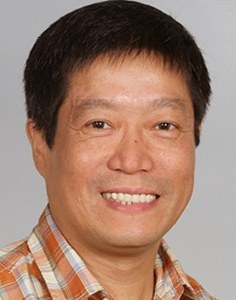 Portrait: Biozentrum, University of Basel
Shuo Lin is the fourth of thirteen authors on a 2008 study in Cell Metabolism from the Biozentrum in Basel. The team removed raptor, a key part of the growth-control complex mTORC1, only in the skeletal muscle of mice. These muscles slowly became dystrophic and the mice did not live long. Removing rictor, the matching part of mTORC2, had no such effect. The work was done in mice, so it shows what mTORC1 does in mouse muscle, not directly in people.
PubMed does not list an affiliation for Shuo Lin in this 2008 record. The Biozentrum, University of Basel link comes from a 2013 muscle paper on mTORC1 in atrophy and hypertrophy, where Shuo Lin appears next to the same group members (Bentzinger, Romanino, Hall and Rüegg), and a 2019 raptor paper from the same institute. The Atlas does not carry a source for the person's role, training or current position.
Milestones in the Atlas
A selection, not a full bibliography: only papers that meet the Atlas inclusion criteria.
| Year | Evidence | Study |
|---|---|---|
| 2008 | A | Skeletal muscle-specific ablation of raptor, but not of rictor, causes metabolic changes and results in muscle dystrophy BEN2008 Fourth of thirteen authors on the paper that deleted raptor or rictor in mouse skeletal muscle. |
Co-authors in the Atlas 3
People with a profile here who share at least one study with Shuo Lin.
ShowHide
- C. Florian Bentzinger Muscle stem cell biologist at the Université de Sherbrooke who, as a PhD student in Basel, showed that mTORC1 but not mTORC2 is essential for healthy skeletal muscle
- Markus A. Rüegg Neurobiologist at the Biozentrum of the University of Basel who studies how muscles and the nerve connections that drive them develop, age and fail, including the role of mTOR signalling in muscle.
- Michael N. Hall Discovered TOR in yeast in 1991 and established it as a central controller of cell growth that responds to nutrients. His lab later showed that TOR works in two distinct complexes, TORC1 and TORC2, only one of which is blocked by rapamycin
Every researcher with a profile →
Thank you. That helps us know which pages have been read by someone who knows the work.
Thank you. We will check it and correct the page.
Thank you. Your answer was counted anonymously.