Samuel C. Lapp
First author of the muscle study showing that feeding-induced mTORC1 activation through AKT–TSC2 drives postprandial protein synthesis but is not needed to build or keep muscle mass.
Postdoctoral Research Fellow, Manning Lab, Harvard T.H. Chan School of Public Health · Doctoral student, Manning Lab (from 2020) · MS, University of Illinois at Urbana-Champaign (2020) · BS, Tulane University (2018)
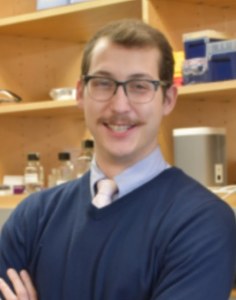 Portrait: Harvard T.H. Chan School of Public Health (Manning Lab)
Samuel Lapp led the study of mice whose skeletal muscle expresses a TSC2 that AKT cannot phosphorylate. Feeding no longer switched on muscle mTORC1 or protein synthesis, but contraction still did, and muscle and fibre size stayed normal. The mice ran longer at maximal effort and had slightly more mitochondria (LAP2026). He is also a co-author on the matching liver study (KAL2026).
He earned a BS at Tulane University (2018) and an MS at the University of Illinois at Urbana-Champaign (2020), then joined the Manning lab as a doctoral student in 2020. Harvard now lists him as a postdoctoral research fellow. His work asks how TSC2 balances inputs such as insulin and how skeletal muscle balances protein and carbohydrate metabolism.
Milestones in the Atlas
A selection, not a full bibliography: only papers that meet the Atlas inclusion criteria.
| Year | Evidence | Study |
|---|---|---|
| 2026 | A | Dietary protein governs the role of insulin signaling in the postprandial regulation of hepatic mTORC1. KAL2026 Co-author: dietary protein governs postprandial hepatic mTORC1, with insulin acting through AKT–TSC2. |
| 2026 | A | Feeding-Induced Muscle mTORC1 Signaling Regulates Postprandial Protein Synthesis and Endurance but Not Muscle Size LAP2026 First author: AKT–TSC2 phosphorylation is required for feeding-induced muscle mTORC1 and protein synthesis, but not for muscle size. |
Co-authors in the Atlas
People with a profile here who share at least one study with Samuel C. Lapp.
- Brendan D. Manning 2 shared studies Was among the groups that in 2002 identified TSC2 as a direct target of Akt, linking insulin and PI3K signalling to mTORC1, and later found TBC1D7 as the third subunit of the TSC complex. His lab has shown how mTORC1 turns growth signals into the synthesis of lipids and nucleotides
- Karen E. Inouye 2 shared studies Metabolic physiologist who runs the Hotamışlıgil lab’s physiology facility, which specialises in glucose clamps, and co-authored two 2026 mouse studies on how feeding controls mTORC1 in liver and muscle.
- Krystle C. Kalafut 2 shared studies Hepatic mTORC1 and nutrient signalling
- Madi Y. Cissé 2 shared studies Research associate in the Manning lab and co-author on the two 2026 mouse studies showing which feeding signals switch on mTORC1 in liver and in skeletal muscle.
- Yann Cormerais 2 shared studies Research scientist in the Manning lab who works on how PI3K–AKT–TSC2 signalling controls mTORC1 in living tissues, using mouse models in which TSC2 cannot be phosphorylated by AKT.
- Gökhan S. Hotamışlıgil Leads a Harvard laboratory on metabolic disease and was elected to the US National Academy of Sciences in 2026 for achievements in metabolic research
Every researcher with a profile →
Thank you. Your answer was counted anonymously.
Thank you. That helps us know which pages have been read by someone who knows the work.
Thank you. We will check it and correct the page.