Sabina Cosulich
Cancer drug discovery scientist at AstraZeneca whose work spans PI3K and mTOR pathway inhibitors, PARP1 inhibitors and phosphoinositide lipid signalling
Oncology R&D, AstraZeneca, Cambridge (PubMed affiliation 2019–2026; Projects Group, 2022) · AstraZeneca, Alderley Park, Macclesfield (2009–2016)
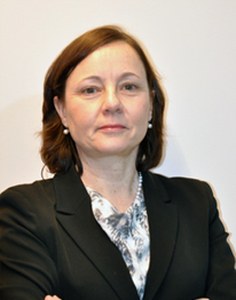 Portrait: American Association for Cancer Research (AACR Journals)
Cancer cells can escape mTOR-blocking drugs by mutating mTOR itself. Sabina Cosulich is a co-author of the 2016 Nature paper in this Atlas (ROD2016), led from Memorial Sloan Kettering and UCSF, which found such mutations in breast cancer cells treated with mTOR inhibitors. Some mutations raised mTOR's own activity. The team then built RapaLink-1, a third-generation drug that joins rapamycin to an ATP-site inhibitor in one molecule, and showed in cells and mice that it still works against the resistant mutants. Cosulich was the AstraZeneca contributor on the author list.
Cosulich has worked on the mTOR pathway at AstraZeneca for many years. A 2009 Biochemical Journal paper with Dario Alessi's group in Dundee, describing the selective mTOR kinase inhibitor Ku-0063794, lists Sabina C. Cosulich together with AstraZeneca colleague Christine Chresta.
Later papers place Cosulich in AstraZeneca Oncology R&D in Cambridge, UK: on a 2019 review and a 2025 study with the Babraham Institute about the fatty-acid make-up of phosphoinositides, the membrane lipids that PI3K signalling uses, on the 2022 preclinical description of the PARP1 inhibitor AZD5305, and on a 2026 paper about a TEAD inhibitor for Hippo-pathway cancers.
Milestones in the Atlas
A selection, not a full bibliography: only papers that meet the Atlas inclusion criteria.
| Year | Evidence | Study |
|---|---|---|
| 2016 | M | Overcoming mTOR resistance mutations with a new-generation mTOR inhibitor ROD2016 Co-author: AstraZeneca contributor to the study that found mTOR resistance mutations and designed RapaLink-1 to overcome them. |
Co-authors in the Atlas 3
People with a profile here who share at least one study with Sabina Cosulich.
ShowHide
- Kevan M. Shokat Co-developed the ATP-competitive 'TORKinib' mTOR inhibitors that block both mTORC1 and mTORC2, and later, with Neal Rosen's lab at Memorial Sloan Kettering, RapaLink-1, a third-generation inhibitor that overcomes mTOR resistance mutations
- Neal Rosen Showed that blocking mTORC1 releases a feedback brake on receptor tyrosine kinases and AKT, explaining how tumours escape mTOR and PI3K inhibitors and shaping how these drugs are combined in the clinic
- Vanessa S. Rodrik-Outmezguine Showed that tumours reactivate AKT after mTOR kinase inhibition, and that the third-generation inhibitor RapaLink-1 overcomes mTOR resistance mutations
Every researcher with a profile →
Thank you. That helps us know which pages have been read by someone who knows the work.
Thank you. We will check it and correct the page.
Thank you. Your answer was counted anonymously.