Rosa Puertollano
Studies how lysosomes are regulated, including how mTORC1 controls the transcription factors TFEB and TFE3 that switch on autophagy and lysosome genes.
Senior Investigator, NHLBI, National Institutes of Health
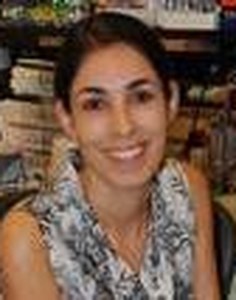 Portrait: NIH Intramural Research Program
Rosa Puertollano is a Senior Investigator at the National Heart, Lung, and Blood Institute at the NIH. Her group treats the lysosome not just as the cell's recycling bin but as a control centre that senses conditions and sends signals.
In the 2012 study in the Atlas, her lab showed how mTORC1 controls autophagy at the level of genes. When nutrients are plentiful, mTORC1 adds a phosphate to the transcription factor TFEB at position Ser211. That tag lets 14-3-3 proteins hold TFEB in the cytosol, away from its target genes.
When mTORC1 is blocked, TFEB is released, moves into the nucleus and turns on genes for autophagy and lysosomes. Her lab also works on TFEB and TFE3 and on animal models of lysosomal storage diseases.
Milestones in the Atlas
A selection, not a full bibliography: only papers that meet the Atlas inclusion criteria.
| Year | Evidence | Study |
|---|---|---|
| 2012 | M | MTORC1 functions as a transcriptional regulator of autophagy by preventing nuclear transport of TFEB MAR2012 Showed that mTORC1 phosphorylates TFEB on Ser211, trapping it in the cytosol with 14-3-3 proteins, and that mTORC1 inhibition frees TFEB to enter the nucleus and drive autophagy genes; Puertollano was senior author. |
| 2013 | M | Rag GTPases mediate amino acid-dependent recruitment of TFEB and MITF to lysosomes MAR2013 Showed that active Rag GTPases bind TFEB and recruit it, and some MITF isoforms, to the lysosome, where mTORC1 can phosphorylate it; Puertollano was senior author. |
Co-authors in the Atlas
People with a profile here who share at least one study with Rosa Puertollano.
- José A. Martina Cell biologist in Rosa Puertollano's group at the NHLBI who works on how mTORC1 and the Rag GTPases control the lysosomal transcription factors TFEB and TFE3.
Every researcher with a profile →
Thank you. Your answer was counted anonymously.
Thank you. That helps us know which pages have been read by someone who knows the work.
Thank you. We will check it and correct the page.