Michele Pagano
Studies ubiquitin ligases, the enzymes that tag proteins for destruction, including how the S6K1 kinase triggers degradation of the translation brake PDCD4.
Chair, Department of Biochemistry and Molecular Pharmacology · May Ellen and Gerald Jay Ritter Professor of Oncology, NYU Grossman School of Medicine
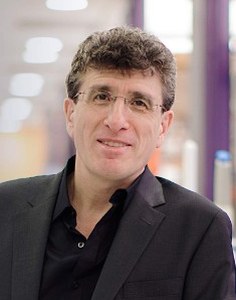 Portrait: NYU Grossman School of Medicine
Michele Pagano is a physician-scientist at NYU Grossman School of Medicine in New York, where he chairs the Department of Biochemistry and Molecular Pharmacology. His laboratory works on ubiquitin ligases, enzymes that attach a molecular tag to other proteins so the cell breaks them down. Controlled protein destruction helps decide when cells divide, grow or stop.
The study in the Atlas, led by first author N. Valerio Dorrello, connected this field to mTOR signaling. Growth signals activate the kinase S6K1, which sits downstream of mTORC1. The team showed that S6K1 phosphorylates a protein called PDCD4, a tumor suppressor that blocks the translation helper eIF4A. The tag lets the ubiquitin ligase SCF-betaTRCP recognize PDCD4 and destroy it.
With PDCD4 gone, cells can build proteins more efficiently. A mutant PDCD4 that resisted destruction slowed translation, made cells smaller and slowed their cycle. The work gave a concrete link between mTOR signaling and the control of protein synthesis and cell size.
Milestones in the Atlas
A selection, not a full bibliography: only papers that meet the Atlas inclusion criteria.
| Year | Evidence | Study |
|---|---|---|
| 2006 | M | S6K1- and betaTRCP-mediated degradation of PDCD4 promotes protein translation and cell growth DOR2006 Showed that S6K1 phosphorylates PDCD4 so that SCF-betaTRCP degrades it, allowing efficient translation and cell growth. Pagano is the senior (last) author. |
Co-authors in the Atlas 1
People with a profile here who share at least one study with Michele Pagano.
ShowHide
- N. Valerio Dorrello Pediatric critical care physician-scientist at Columbia University whose training in Michele Pagano's lab at NYU showed how S6K1 removes the translation brake PDCD4, and who now works on repairing injured children's lungs
Every researcher with a profile →
Thank you. That helps us know which pages have been read by someone who knows the work.
Thank you. We will check it and correct the page.
Thank you. Your answer was counted anonymously.