Luigi Fontana
Studies how diet and calorie restriction affect human ageing and metabolic health, and co-wrote a widely cited Science review linking dietary restriction to nutrient-sensing pathways such as mTOR
Professor and Leonard Pullmann Chair in Translational Metabolic Health, University of Sydney · Royal Prince Alfred Hospital · Washington University School of Medicine, St. Louis (affiliation on FON2010, 2010)
Charles Perkins Centre, Faculty of Medicine and Health, University of Sydney (Sydney, New South Wales, Australia) ↗ ORCID0000-0001-8500-5537 ↗
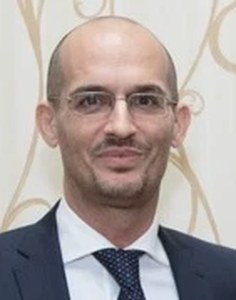 Portrait: University of Sydney
FON2010 is a review written by Luigi Fontana, Linda Partridge and Valter Longo. It collects evidence from yeast, worms, flies, mice, monkeys and people that eating less, or turning down nutrient-sensing pathways such as mTOR and growth hormone/IGF-1 signalling, can slow ageing and lower the risk of age-related disease. The authors argue that dietary restriction and reduced pathway activity may work through similar mechanisms that evolution has conserved.
When the paper appeared, Fontana was at the Division of Geriatrics and Nutritional Science of Washington University School of Medicine in St. Louis. He is now a professor at the University of Sydney, based at the Charles Perkins Centre and linked to Royal Prince Alfred Hospital, where he holds a chair in translational metabolic health.
His honours include the AFAR Breakthroughs in Gerontology Award (2009), the Glenn Award for Research in Biological Mechanisms of Aging (2011) and the AFAR Vincent Cristofalo Award (2016). In the Atlas the review is useful as a bridge: it connects the molecular mTOR work to what is known about diet and ageing in humans.
Milestones in the Atlas
A selection, not a full bibliography: only papers that meet the Atlas inclusion criteria.
| Year | Evidence | Study |
|---|---|---|
| 2010 | R | Extending healthy life span--from yeast to humans FON2010 First author of a Science review arguing that dietary restriction and reduced nutrient-sensing signalling, including mTOR, may slow ageing by similar conserved mechanisms. |
Co-authors in the Atlas 2
People with a profile here who share at least one study with Luigi Fontana.
ShowHide
- Linda Partridge Showed that rapamycin extends fruit-fly lifespan through TORC1, via autophagy and reduced protein synthesis, and that it adds benefit even on top of dietary restriction
- Valter D. Longo Studies how nutrient-sensing pathways (including TOR and GH/IGF-1) and diet shape ageing and resistance to stress and disease, from yeast to mice and people.
Every researcher with a profile →
Thank you. That helps us know which pages have been read by someone who knows the work.
Thank you. We will check it and correct the page.
Thank you. Your answer was counted anonymously.