Julie Perroy
Neurobiologist who co-led AIMTOR, a biosensor for watching mTOR activity live in single cells and in separate parts of the cell
CNRS Research Director (DR1) and team leader, Institut de Génomique Fonctionnelle, Montpellier · PhD, University of Montpellier (2001)
Perroy Team, Institut de Génomique Fonctionnelle (IGF) (Montpellier, France) ↗
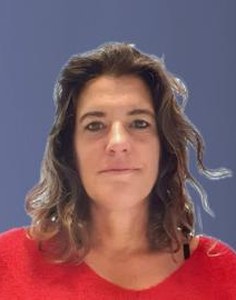 Portrait: IGF Montpellier
Julie Perroy earned her PhD in cellular biology at the University of Montpellier in 2001 and leads a team at the Institut de Génomique Fonctionnelle (CNRS, INSERM, University of Montpellier). She has been a CNRS research director since 2012 (DR1 since 2020) and held an ERC Consolidator Grant from 2015 to 2021.
With Vincent Ollendorff's group she co-led AIMTOR, a genetically encoded BRET biosensor that reports mTOR activity in living cells, in single cells and in specific compartments such as the lysosome surface, the nucleus and the area near mitochondria. In neurons it showed that higher neuronal activity increases mTOR signalling, and it picked up mTOR signalling defects in mouse models of autism spectrum disorder.
Milestones in the Atlas
| Year | Evidence | Study |
|---|---|---|
| 2020 | M | AIMTOR, a BRET biosensor for live imaging, reveals subcellular mTOR signaling and dysfunctions BOU2020 Co-senior author on AIMTOR, the BRET biosensor for live, subcellular readout of mTOR activity. |
Co-authors in the Atlas
People with a profile here who share at least one study with Julie Perroy.
- Nathalie Bouquier Built AIMTOR, a glowing biosensor that lets researchers watch mTOR activity move around inside a living cell in real time
- Vincent Ollendorff Co-led the Montpellier team that built AIMTOR, a light-emitting biosensor for watching mTOR activity inside living cells, as part of his work on muscle metabolism