Joseph A. Baur
Biologist of aging at the University of Pennsylvania whose lab showed that rapamycin's harm to glucose control comes from mTORC2 loss and studies how NAD levels shape health
Professor of Physiology, Institute for Diabetes, Obesity, and Metabolism, Perelman School of Medicine, University of Pennsylvania · postdoc, Paul F. Glenn Laboratories, Harvard Medical School (David Sinclair lab, 2006 paper) · PhD research, Department of Cell Biology, UT Southwestern Medical Center (Woodring Wright and Jerry Shay, 2001 paper)
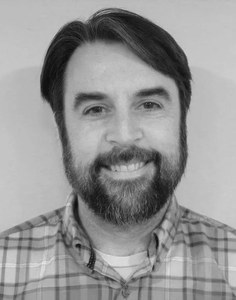 Portrait: Academy of Geroscience
Joseph Baur is senior author of an Atlas study (LAM2012) that solved a puzzle about rapamycin. The drug lengthens life in mice, yet long-term use makes them glucose intolerant and insulin resistant, which looks like early diabetes. The team showed that chronic rapamycin, at doses close to those that extend lifespan, gradually disrupts a second mTOR complex, mTORC2, and that loss of mTORC2 in the liver explains the insulin problem: the liver keeps making glucose when it should stop. Mice with genetically lowered mTORC1 activity lived longer with normal glucose handling. So the longevity benefit and the metabolic side effect can be separated, which opened the search for drugs that hit only mTORC1.
Baur did PhD research in the Department of Cell Biology at UT Southwestern Medical Center in Dallas with Woodring Wright and Jerry Shay, showing in 2001 that genes near telomeres, the ends of chromosomes, are silenced in human cells depending on telomere length. As a postdoc at Harvard Medical School in David Sinclair's lab, Baur was first author of the 2006 Nature paper showing that resveratrol improved health and survival of mice on a high-calorie diet.
Today Baur is professor of physiology at the Perelman School of Medicine and the Institute for Diabetes, Obesity, and Metabolism at the University of Pennsylvania. The lab studies basic mechanisms of aging with two main lines. One is NAD, a molecule every cell needs for energy metabolism; the lab identified SLC25A51 as the transporter that carries NAD into mitochondria. The other is rapamycin, where the lab works to separate its longevity effects from side effects, including showing that its effect on blood fats involves loss of mTORC1 signaling in fat cells.
Milestones in the Atlas
A selection, not a full bibliography: only papers that meet the Atlas inclusion criteria.
| Year | Evidence | Study |
|---|---|---|
| 2012 | A | Rapamycin-induced insulin resistance is mediated by mTORC2 loss and uncoupled from longevity LAM2012 Senior author: led the work showing that chronic rapamycin causes insulin resistance through mTORC2 loss, separable from its lifespan benefit. |
Co-authors in the Atlas 5
People with a profile here who share at least one study with Joseph A. Baur.
ShowHide
- Adam B. Salmon Biologist of aging at UT Health San Antonio whose work in this Atlas spans rapamycin in mice and in common marmosets. He is a co-author on the Interventions Testing Program reports from the San Antonio site and on the marmoset rapamycin studies on blood markers, epigenetic age and the salivary gland
- Arlan Richardson Studies how rapamycin slows ageing in mice, including the broad changes it causes in the liver, and co-authored early studies showing that rapamycin protects memory in Alzheimer's-model mice
- David A. Guertin Built the mouse genetics that defined mTORC2's biological roles
- David M. Sabatini Identified mTOR (as RAFT1) in 1994. His lab then mapped much of the machinery around it: raptor and rictor at the core of mTORC1 and mTORC2, the Rag–Ragulator system that docks mTORC1 on the lysosome, and the sensors that detect leucine, arginine and SAM
- Dudley W. Lamming Showed as a postdoc that rapamycin's harm to glucose metabolism comes largely from its effect on mTORC2, while the lifespan benefit tracks mTORC1. His Wisconsin lab studies intermittent rapamycin dosing and how restricting dietary protein or single amino acids affects metabolism and ageing
Every researcher with a profile →
Thank you. That helps us know which pages have been read by someone who knows the work.
Thank you. We will check it and correct the page.
Thank you. Your answer was counted anonymously.